

The Forbes article by Meggen Harris points to something important: digital nomads and remote workers are increasingly choosing places based on better weather, lower costs and a higher quality of life, rather than just exotic experiences or polished Instagram images. At the same time, reports show that the number of digital nomads has grown dramatically since 2019. This says something larger about our time: people are no longer moving only for work. They are moving away from one way of living and toward another.
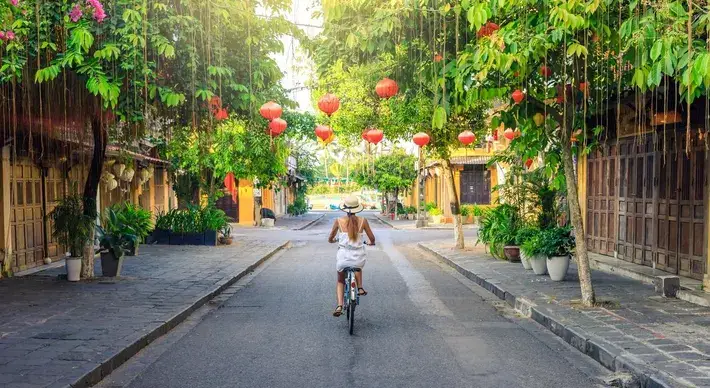
From Career Relocation to Life Relocation
In the past, people moved to where the job was. To the industry. To the office. To the capital city. To the factory. To wherever someone else had decided the future was located. Human life adapted itself to the geography of work.
Now the map is being redrawn.
The digital nomad is no longer just the young freelancer with a laptop in Bali, a coconut on the table and a half-fake smile of freedom aimed at the camera. The new nomad is often something entirely different: a consultant, a programmer, a writer, a designer, a project manager, an entrepreneur, a senior professional, a single person, a couple, sometimes even a family.
It is no longer only about travel. It is about choosing an environment.
And environment is not a small thing. Weather affects mood. Light affects energy. Costs affect freedom. Living space affects creativity. Access to nature affects the body. The pace of a city affects the nervous system. Anyone who has ever been trapped in a grey open-plan office in November knows that climate is not only something meteorologists talk about. Climate is also psychology.
Weather as a Life Strategy
It sounds almost banal: people move for better weather. But behind that simple statement lies a deeper truth.
Better weather does not only mean more hours of sunshine. It means more walks. More spontaneous conversations outdoors. More lunches on a terrace. Fewer days when the body feels trapped in darkness. More mornings when you actually want to get up.
In Northern Europe, we have long romanticized endurance. Rain, wind, darkness and duty have almost become part of the work ethic. You are supposed to endure. You are supposed to go to work. You are not supposed to complain. But when work moves into the computer, an uncomfortable question appears: why should I sit here and freeze if I can do the same work from a place where I feel better?
That is not laziness. That is rationality.
A person who works better, sleeps better, moves more and lives with lower costs can be more productive than someone sitting in an expensive country, in an expensive home, with poor light and chronic fatigue.
That is why places such as Spain, Portugal, Malta, Greece, Bulgaria, Croatia, Thailand, Mexico and Vietnam are becoming increasingly interesting. Not only for tourists, but for people who want to live there, at least for part of the year.
The Big Difference Between a Tourist and a Nomad
The tourist consumes a place. The nomad uses the place as a temporary home.
That is a huge difference.
The tourist arrives on Friday, eats, takes photos, drinks, checks out and moves on. The digital nomad stays for weeks or months. Rents an apartment. Shops in local stores. Goes to the same café. Finds a hairdresser. Learns the street. Pays for coworking, gyms, food, transport and local services.
That makes digital nomads economically interesting for countries and cities that previously saw themselves mainly as tourist destinations. But it also makes them politically sensitive.
When people with international incomes arrive in places with local wages, friction appears. Rents can rise. Cafés can change character. Local residents may feel that their city is being sold to people who are only there temporarily.
That is why the next phase of digital nomadism must become more mature. Less “I take what I want” and more “how can I contribute to the place where I live?”
Quality Before Exoticism
In the beginning, much of the digital nomad movement was about freedom from the office. People wanted to get away. Away from the boss, the commute, the winter, the rents, the grey everyday life. Freedom was defined as absence.
But freedom based only on escape often becomes empty.
What many people are now looking for is not just a new place, but a better system for life. Lower costs matter, but not if healthcare does not work. Good weather matters, but not if the internet is unreliable. Beautiful nature is wonderful, but not if you feel alone. Coworking can be useful, but not if it only becomes a club for rootless people who never meet the local population.
This is where quality comes in.
Quality is not luxury. Quality is balance. Being able to work with focus in the morning, take a walk in the sun in the afternoon, eat good food without being ruined, feel safe, have access to healthcare, internet and people.
The modern digital nomad is therefore becoming less nomadic than the name suggests. Many are becoming “slowmads” instead — people who stay longer, build routines and choose fewer but better places.
Why Bansko Fits the Picture
Bansko is a perfect example of this development.
It is not a glossy metropolis. It is not polished. It is not built to impress venture capitalists. It is a mountain town with rough edges, winter tourism, summer hiking, digital nomads, local life, old houses, new apartments, dogs in the streets, mountains on the horizon and a strange mixture of international energy and Bulgarian everyday reality.
And that is precisely why it works.
There is something here that many larger digital nomad hubs are beginning to lose: a sense of reality. You can work digitally in the morning and walk straight out into the Pirin Mountains after lunch. You can meet people from all over the world without completely losing contact with the local place. You can live more cheaply than in Western Europe, while still being close to the EU, Sofia, airports, mountains, culture and a growing entrepreneurial environment.
For a senior digital nomad, or an experienced entrepreneur who no longer wants to play the old career game, this is especially interesting. You no longer need to live where the system placed you. You can live where your body, your economy and your creativity can breathe.
But Freedom Requires Discipline
There is, however, one lie inside the romance of the nomad lifestyle: that freedom automatically makes life better.
It does not.
Freedom without structure becomes chaos. Freedom without money becomes stress. Freedom without relationships becomes loneliness. Freedom without purpose becomes a long holiday that slowly loses its colour.
That is an important counterpoint. Not everyone feels good moving around. Not everyone becomes happier by having the world as an office.
It requires self-leadership.
You must be able to create your own working day. Manage your finances. Understand visa rules. Handle taxes. Choose insurance. Build networks. Know when to stay. Know when to leave. And perhaps most importantly: know why you are moving.
Because the person who only chases better weather will soon discover that even the sun casts shadows.
Countries Are Competing for People
The new reality is that countries are no longer only competing for tourists. They are competing for people whose income comes from outside but is spent locally.
That is why digital nomad visas have become a political tool. Countries want to attract remote workers, entrepreneurs and creative professionals who can live in the country without taking local jobs.
This is not only tourism. It is economic strategy.
The question is which countries understand the opportunity without destroying what made the place attractive in the first place. If you only attract people with money, but do not build bridges to the local population, you create parallel societies. If, on the other hand, you combine digital nomadism with local entrepreneurship, education, culture, mentorship and long-term investment, it can become something much stronger.
Here, Bulgaria has an opportunity. The country has a low cost level compared with many Western European countries, a strong geographical position, a growing IT sector, powerful nature, EU membership and cities such as Sofia, Plovdiv, Varna and Bansko with different kinds of attraction.
But then digital nomads must no longer be seen as temporary laptop tourists. They must be seen as potential bridge builders.
The Senior Nomad
One of the most interesting groups in this movement is the older digital nomads.
Not pensioners in the traditional sense. Not people who have given up. But people with experience, knowledge, networks and life courage who suddenly realise that they no longer need to ask for permission.
They may have grown tired of age discrimination. Tired of recruitment systems that do not understand experience. Tired of high living costs. Tired of having their competence treated as something old, when in reality it is deeply useful.
For them, digital nomadism is not a youth game. It is a second chance.
Moving to a country with better climate and lower costs can be the difference between slowly shrinking and beginning to expand again. You can write. Consult. Start projects. Hold workshops. Build networks. Help younger entrepreneurs. Create a new role outside the narrow corridors of the old labour market.
This is where digital nomadism becomes something bigger than travel. It becomes a way of reclaiming life force.
The Future Is Not Office-Free — It Is Place-Conscious
Remote work is often discussed as if place no longer matters. That is wrong. Place matters more than ever.
When work no longer ties us to one address, we begin to choose places according to who we become there.
Do I become healthier here?
Do I become braver here?
Do I become more creative here?
Do I become less afraid here?
Do I become more myself here?
Those are the real questions behind the move toward better weather and higher quality of life.
Digital nomads are not only moving away from bad climate. They are moving away from bad life contracts. From cities that are too expensive. From systems that demand more than they give back. From work cultures where the human being is reduced to presence rather than result.
And they are moving toward something else: light, movement, freedom, community, nature, lower costs and a stronger sense of life.
The End of an Old Obedience
Perhaps this is the most provocative thing about digital nomadism: it breaks the old obedience.
It says that work does not always have to happen where the company is located. That career does not always have to mean the big city. That quality of life is not a bonus after retirement. That weather, nature and everyday joy are not minor details, but central parts of a functioning life.
This does not mean that everyone should become a digital nomad. It does not mean that all problems can be solved with a laptop and a one-way ticket. But it does mean that more people now see a possibility that was previously reserved for a few.
To choose a place is to choose a life.
And perhaps that is why the point of the Forbes article feels so relevant right now. This is not only about sun. It is about dignity. It is about people beginning to ask themselves: if I can work from almost anywhere, why would I not choose a place where I actually feel better?
That is not escape.
It may be the beginning of a new kind of intelligence.
A geographical intelligence.
A human intelligence.
A life strategy.

By Chris...
Add comment
Comments