

When Bulgaria wins, it can be heard. When the country breaks through internationally on a major stage, something awakens in people. Pride. Joy. Recognition. A feeling that the world has finally seen what many Bulgarians have known for a long time: that Bulgaria has power, talent, expression, and a voice of its own.
We saw that with “Bangaranga.” Suddenly, Bulgaria was no longer only a country often described through problems, poverty, corruption, emigration, or post-communist stagnation. Bulgaria became energy. Stage. Music. Rhythm. Victory. A country able to stand in the middle of Europe and say: we are here.
But there is another Bulgarian success that deserves the same pride.
It is quieter. Slower. It does not arrive with confetti, spotlights, and public votes. It comes through cinema, landscapes, faces, borderlands, and that hard-to-capture feeling that Bulgaria is more than many people, perhaps even Bulgarians themselves, fully understand.
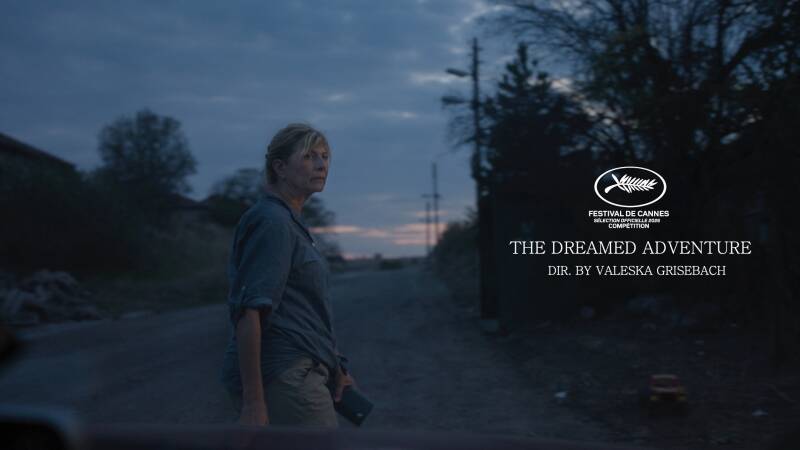
It is called The Dreamed Adventure.
Valeska Grisebach’s film, shot in the Svilengrad region of Bulgaria, was selected for the Official Competition at the Cannes Film Festival 2026. That is not a small detail. Cannes is one of the most important film festivals in the world. When a film with such a strong Bulgarian presence reaches that stage, it means much more than a note in the film press. It means that Bulgaria is not just being used as scenery. Bulgaria is carrying the story.
And that is why Bulgarians should be as proud of The Dreamed Adventure as they are of “Bangaranga.”
Two Different Stages – The Same Country
“Bangaranga” is the Bulgaria that is heard immediately. It is energy, rhythm, audience, television, stage, victory, and national joy. It is easy to understand why people gather around such a success. It is visible. It is immediate. It gives a country a shared emotional moment in just a few minutes.
Cinema works differently.
The Dreamed Adventure demands another kind of attention. It does not ask the audience to vote. It asks the audience to look. Not only to see Bulgaria as a place, but to look into Bulgaria as an experience. In the film, the borderland around Svilengrad becomes more than a backdrop. It becomes a mental map of history, identity, memories, survival, and dreams.
That is why these two cultural moments are not opposites. They complement each other.
One shows Bulgaria’s pulse.
The other shows Bulgaria’s depth.
One says: Bulgaria can create moments that Europe remembers.
The other says: Bulgaria has stories the world needs to understand.
Cannes Is Also a Victory
Eurovision is easy to understand. Everyone knows what a win means. A country competes. An entry wins. The flag appears. The celebration follows. It is simple, fast, and emotionally direct.
Cannes is more subtle. Prizes are awarded there too, but much of its power lies in the selection itself. For a film to be chosen for Official Competition means that it is considered worthy of belonging to the most prestigious conversation about world cinema. It is placed alongside works by established directors, film nations, and producers. It becomes part of international film history.
When The Dreamed Adventure reaches that space, Bulgaria follows with it.
This does not mean that the film is “Bulgarian” in the same way as a national Eurovision entry. It is a European co-production. It is directed by a German filmmaker. But that does not make Bulgaria’s role smaller. On the contrary. It shows that Bulgaria can be a place where European cinema is born. Not only a low-cost filming location, not only a practical solution, but an artistic center for a story.
That is something to be proud of.
Bulgaria as Story, Not Just Background
For a long time, Bulgaria has often been viewed from the outside. Sometimes as a cheap country. Sometimes as a problematic country. Sometimes as a beautiful but broken country. Sometimes as a place where one can shoot something that is supposed to represent somewhere else.
But in The Dreamed Adventure, something else seems to happen. Bulgaria is allowed to be Bulgaria.
The Svilengrad region is not random. It lies near the borders with Turkey and Greece. It is a place where Europe meets something else, where old trade routes, modern border systems, migration, crime, history, and everyday life cross one another. Such an area is already charged. It carries drama before anyone even writes a script.
Borderlands are never neutral. They are places where people pass through, get stuck, hide, wait, work, make money, lose money, and remember things others would rather forget. There, the state becomes visible. Control becomes visible. Freedom and unfreedom become concrete.
When a film allows such a landscape to speak, it becomes larger than fiction. It becomes a form of cultural archaeology.
A Film That Digs Into Bulgaria
It is also important that the film’s story revolves around archaeology. An archaeologist does not only uncover objects. She uncovers layers of human life. She searches for traces of what has been, but which still affects the present.
That is an almost perfect image of Bulgaria.
Bulgaria is a country built from layers. Ancient civilizations. Roman roads. Ottoman legacy. Orthodox Christianity. Communist concrete. Post-communist survival. EU membership. Digital futures. Young people leaving. Foreigners arriving. Families staying. Old wounds that have never fully been processed.
All of this exists at the same time.
That is why Bulgaria is such a powerful cinematic landscape. The country has not been fully explained. It is not smooth. It is not polished. It is full of traces, contradictions, remains, and possibilities. A film that understands this can show something that tourism campaigns never can.
It can show the soul of a country.
Pride Does Not Always Have to Be Loud
There are different kinds of national pride. The simplest pride comes when you win. Then it is almost enough to point to the result. First place. Gold. Victory. Applause. International press.
But there is also a deeper pride. It is not about being the best. It is about being taken seriously.
The Dreamed Adventure gives Bulgaria exactly that opportunity.
It does not say: look, Bulgaria won.
It says: look, Bulgaria is worth understanding.
That may be even more important.
For a country that has long struggled with its self-image, with young people leaving, with political frustration, and with the feeling that the rest of Europe often looks down on the Balkans, it is hugely meaningful when an international film points to Bulgaria and says: here is a story worthy of Cannes.
It is another kind of victory. But it is still a victory.
The Power of Non-Professional Faces
One central part of the film’s strength seems to be its use of non-professional actors. That matters. Because when people from a place are allowed to carry the story themselves, something special happens.
Professional actors can be extraordinary. But sometimes there is something in an ordinary face that cannot be acted into existence. A life. A weight. A look that knows something. A body that moves with the history of a place inside it.
In Bulgaria, such faces are everywhere. People who have lived through system changes. People who remember scarcity, control, hope, disappointment, migration, and families split apart by economic conditions. Young people who speak several languages but do not know whether their future is at home or abroad. Older people who carry an entire era in their silence.
When such faces appear in a film that reaches Cannes, it is also a form of recognition. It says that stories are not only found in capitals, wealthy environments, or polished cultural centers. They exist in border regions, small towns, dusty rooms, kitchens, landscapes, and in people who rarely get to stand at the center.
That too should be a source of pride.
Bulgaria Needs to See Its Own Value
One of Bulgaria’s great problems is not a lack of culture. It is not a lack of history. It is not a lack of nature, talent, or stories. On the contrary. There is almost too much material.
The problem is sometimes that the country does not always see its own value.
Many Bulgarians are quick to criticize their country. That is understandable. Corruption, bureaucracy, low wages, political fatigue, and lack of future confidence leave marks. But sometimes self-criticism becomes so strong that people miss what others see: enormous cultural richness, visual power, human complexity, and an authenticity that many more polished countries have lost.
This is where The Dreamed Adventure becomes important.
The film can help Bulgaria see itself from the outside. Not as a failed version of Western Europe, but as something of its own. A country with its own weight, rhythm, history, and images.
The same thing happened with “Bangaranga,” but on another level. There, Bulgaria heard its energy through Europe’s applause. Here, Bulgaria sees its depth through the world’s cinema camera.
From Stage Lights to Layers of Soil
One could say that “Bangaranga” came from the stage lights.
The Dreamed Adventure comes from the layers of soil.
But both touch the same thing: the need for Bulgaria to be seen with respect.
One is an explosion.
The other is an excavation.
One makes people dance.
The other makes people think.
One shows what Bulgaria can express when the country gathers its energy into a single moment.
The other shows what Bulgaria carries when the camera stays long enough to truly look.
And that is why they should not be set against each other. They should be understood together. A country needs both celebration and depth. Both popular culture and cinema. Both rhythm and silence. Both stage and landscape.
Bulgaria Is Bigger Than Its Self-Image
Perhaps the most important thing about The Dreamed Adventure is that it can help expand Bulgaria’s self-image. Because if a country only feels pride when it wins a competition, that pride becomes short-lived. It must constantly be fed by new victories.
But if a country begins to feel pride in its depth, its people, its places, and its stories, then something else happens. Pride is no longer dependent on points, rankings, or applause. It becomes part of identity.
That is where Bulgaria needs to be.
The country needs to understand that it is not only interesting when it wins. It is interesting when it is true.
And The Dreamed Adventure seems to be trying to approach that truth. Not the perfect truth. Not the tourist-friendly truth. Not the polished truth. But the layered truth of memories, borders, relationships, and lives that make Bulgaria Bulgaria.
A Pride That Goes Deeper
That is why Bulgarians should talk more about The Dreamed Adventure. They should see it as more than an international film with a Bulgarian connection. They should see it as proof that their landscapes, their people, and their history carry artistic weight at the highest level.
It is not the same kind of pride as when a song wins. It does not come with the same cheering. It may not fill the squares. It may not become memes, slogans, or headlines in the same way.
But it may last longer.
Because when a film reaches Cannes with Bulgaria as a living center, the world is saying something that Bulgaria itself sometimes forgets:
You are not just a country on the edge of Europe.
You are a story.
You are a landscape full of memory.
You are faces carrying history.
You are a place where art can emerge.
You are worth seeing.
And that should be enough for pride.
Not instead of “Bangaranga.”
But alongside it.
Because Bulgaria needs both the sound of victory and the silence of recognition.
Both say the same thing, in different languages:
Bulgaria is here.

By Chris...
In Svilengrad, a small town on the Bulgarian border, Veska, crosses paths with Said, an old acquaintance whose car has been stolen. Offering her help, she brings him along to the excavation site where she is working as an archaeologist. As they reconnect, Veska is pulled more into the shady world that he (Said) has emerged from, soon embarking on her own exploration of the criminal ties that lurk beneath the surface of this seemingly innocent town at the outskirts of Europe. As figures from her own past start to close in, Veska is forced to confront the truth about the town and her experiences.
Add comment
Comments