

Sad Hill Cemetery – When Film Fans Dug a Legend Out of the Earth
In the barren hills of Burgos in northern Spain lies a cemetery where no one is actually buried — yet thousands of people have their names on a cross. Sad Hill Cemetery, the iconic film location from Sergio Leone’s western classic The Good, the Bad and the Ugly, disappeared beneath earth and vegetation after filming in 1966. Almost fifty years later, a group of film lovers decided to dig the legend back into the light. With shovels, persistence, crowdfunding and pure passion, they rebuilt the place stone by stone, cross by cross. The result was not only a restored film set, but a living monument to culture, community and the human ability to bring old dreams back to life. Sad Hill is the story of what happens when fans do not merely remember film history — they rebuild it.

A Cemetery That Never Existed — Yet Somehow Became Real
Some film locations are visited, photographed and forgotten. Others become pilgrimage sites. Sad Hill Cemetery belongs to the second category.
In the dry landscape of northern Spain, thousands of wooden crosses now stand again in a circular graveyard that looks as if it belongs to another century. Visitors walk between the graves, search for names, take pictures and stand silently in the middle of the great stone circle. But no one is buried there. Sad Hill is not a real cemetery. It was created for cinema.
The place became famous through Sergio Leone’s 1966 masterpiece The Good, the Bad and the Ugly, one of the most influential westerns ever made. The film’s final duel, with Clint Eastwood as Blondie, Lee Van Cleef as Angel Eyes and Eli Wallach as Tuco, takes place in this vast circular burial ground. It is not only a scene. It is a ritual. Leone turned a western showdown into opera, theatre and myth.
For that scene, he needed more than a backdrop. He needed an arena.
Sergio Leone’s Arena of Death
Sergio Leone did not want a normal graveyard. He wanted something enormous, theatrical and almost unreal. The final confrontation in The Good, the Bad and the Ugly had to feel larger than life. It was not just three men fighting over gold. It was greed, survival and destiny meeting in one place.
To build Sad Hill Cemetery, the production received help from the Spanish army. Hundreds of soldiers worked on the site. Thousands of graves were constructed. Stones were moved, circles were marked out, crosses were raised and the central arena was created. In the middle of nowhere, a gigantic cemetery appeared.
The result was one of the most memorable locations in film history.
But what truly completed the scene was Ennio Morricone’s music. His score turned silence, glances and waiting into unbearable tension. The camera moves from face to face. Hands hover near guns. Sweat appears. The music rises. Everything slows down until the entire world seems to exist only inside that circle.
For many film lovers, the final duel remains one of the most perfect moments ever created for the screen.
Then the Film Crew Left
After filming ended, the production moved on. The actors left. The cameras disappeared. The crew packed up. The cemetery remained.
But no one protected it.
Sad Hill had been built as a film set, not as a monument. Nature slowly took over. Rain, wind, grass and bushes covered the graves. The crosses disappeared. The paths vanished. The circular structure faded into the landscape. Decades passed, and the legendary cemetery became almost impossible to find.
It was still there, but buried.
Like a forgotten memory.
The Fans Who Refused to Let It Die
Almost fifty years later, a group of film enthusiasts began asking a simple question: what happened to Sad Hill?
They studied old photographs, compared maps, searched the mountains and walked through the landscape. Eventually, they found the place. But what they discovered was not the cemetery from the film. It was an overgrown field. The structure was hidden. The magic was buried under earth and vegetation.
Most people would have taken a few pictures and gone home.
These people did something else.
They decided to rebuild the entire cemetery.
The project was organized through Asociación Cultural Sad Hill, a cultural association created by people who believed that this film location deserved to be brought back. What started as a small group of dedicated fans soon became an international movement. Volunteers came from Spain and from abroad. Some had seen the film many times. Some had grown up with it. Some simply understood that this place mattered.
They dug. They cleared the ground. They carried stones. They rebuilt paths. They raised crosses. They worked without the glamour of Hollywood and without a large budget. What they had was something stronger: a clear vision.
They knew what Sad Hill had been.
And they knew what it could become again.
Crowdfunding, Crosses and Personal Graves
To finance the restoration, the association created a brilliant and slightly surreal idea. Fans could donate money and have their name, nickname or initials placed on one of the cemetery’s wooden crosses.
Suddenly, Sad Hill became personal.
People were no longer just helping to restore a film location. They were becoming part of it. Their names would stand in the same cemetery where one of cinema’s most famous scenes had been filmed.
It is a strange thought: buying your own symbolic grave in a cemetery where no one is dead. But that is also what makes the project beautiful. Sad Hill became a place where fiction, memory and personal identity met.
Normally, people do not want to find their own grave. At Sad Hill, they travel across countries to do exactly that. They look for their cross. They photograph it. They share it. They smile.
It may be the only cemetery in the world where people are proud to stand beside their own name.
A Project Built on Passion, Not Profit
Sad Hill is fascinating because it challenges how we usually think about projects.
There was no major corporation behind it. No massive marketing department. No huge public budget. No billionaire investor. The project grew because people cared.
That is important.
In today’s world, we often talk about projects in terms of funding, strategy, revenue and return on investment. Of course those things matter. But Sad Hill proves that another force can be just as powerful: emotional ownership.
The volunteers felt that the place belonged to them, not legally, but culturally. They had carried the film inside themselves for years. By restoring the cemetery, they were not only rebuilding a location. They were rebuilding a part of their own imagination.
That kind of commitment cannot be bought.
It has to be awakened.
The Documentary That Captured the Story
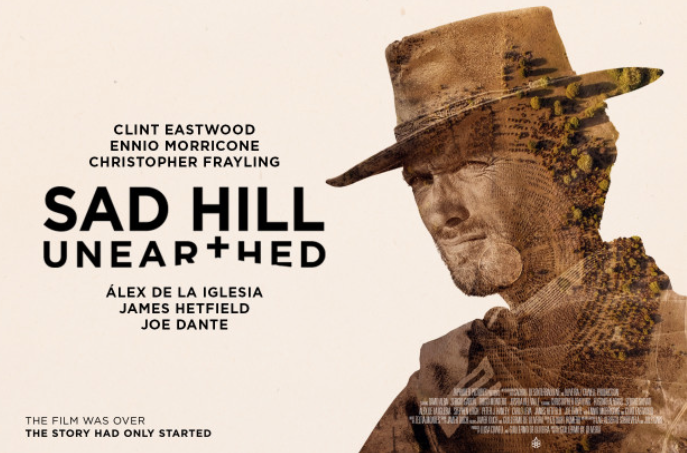
The restoration eventually became the subject of the documentary Sad Hill Unearthed, directed by Guillermo de Oliveira. The film tells the story of the fans, the work, the history and the strange emotional power surrounding the place.
The documentary also shows how deeply cinema can affect people. For some, The Good, the Bad and the Ugly is only an old western. For others, it is part of their childhood, their identity and their understanding of storytelling.
The film includes voices from people connected to the legacy of the original movie, and it helps explain why the restoration mattered. This was not nostalgia in the shallow sense. It was not simply about looking backward. It was about preserving something that had shaped people.
That is the difference between consuming culture and carrying culture.
What Project Managers Can Learn from Sad Hill
From a project management perspective, Sad Hill is a remarkable case.
It began with almost nothing except an idea. The goal, however, was clear: find the old cemetery and restore it as faithfully as possible. That clarity created direction. People understood the mission. They could see the result before it existed.
Many professional projects fail because the vision is vague. Budgets exist, meetings happen, documents are produced, but no one truly feels the purpose. Sad Hill worked the other way around. The purpose came first. The structure followed.
The project also shows the power of participation. People were not just spectators. They became contributors. Through donations, physical work and the crosses bearing their names, they were written into the story.
That is why the restoration became more than maintenance. It became a movement.
When Culture Creates Local Value
Sad Hill also shows that culture can create real value for a region.
A forgotten film location became a destination. Visitors came. Media noticed. The documentary spread the story further. The surrounding area gained attention. Hotels, restaurants and local businesses could benefit from people who travelled there because of a film made decades earlier.
This is the kind of cultural tourism that cannot be manufactured with slogans alone. It needs authenticity. Sad Hill has that authenticity because the restoration was not created from a marketing campaign. It came from genuine passion.
People can feel the difference.
They do not visit Sad Hill only because Clint Eastwood once stood there. They visit because the place carries a story of resurrection. It disappeared. Fans found it. Together they brought it back.
That gives the location a soul.
More Than an Old Western
For younger generations, The Good, the Bad and the Ugly may seem like an old film from another era. But Sad Hill proves that some stories continue to live because they touch something timeless.
The film speaks about greed, courage, survival, loyalty and betrayal. It shows men chasing gold through a brutal world. It is dirty, violent, humorous and strangely beautiful. Leone’s westerns were never clean heroic myths. They were stories about flawed people moving through chaos.
That may be why they still work.
And Sad Hill, as a place, concentrates all of that energy. It is the final arena where everything comes together: the gold, the guns, the lies, the music and the silence before the shot.
To stand there today is to stand inside a piece of cinema history.
A Cemetery for the Living
Sad Hill Cemetery is a paradox. It is a fake cemetery that became a real cultural monument. It is a place of death where people celebrate life. It is a film set that became more meaningful after the cameras left.
The people who restored it did more than rebuild crosses. They proved that memory can be physical. They showed that passion can organize people across borders. They reminded us that culture survives when someone cares enough to protect it.
In an age where so much is digital, temporary and quickly forgotten, Sad Hill feels different. It is made of earth, wood, stone, sweat and stubbornness. It exists because people left their screens, picked up tools and did the work.
That is why the story matters.
Sad Hill is not only about Sergio Leone, Clint Eastwood or Ennio Morricone. It is about ordinary people who refused to let something magical disappear.
They did not wait for permission from Hollywood.
They did not wait for someone else to save it.
They started digging.
And from the earth, they brought back a legend.

By Chris...
Sad Hill Unearthed tells the remarkable story of how one of cinema’s most iconic film locations was brought back to life by passion, memory and community. Built in 1966 for Sergio Leone’s legendary western The Good, the Bad and the Ugly, Sad Hill Cemetery in Burgos, Spain, was abandoned after filming and slowly disappeared beneath the landscape.
Almost fifty years later, a group of devoted film fans from Asociación Cultural Sad Hill began restoring the forgotten site. Through crowdfunding, volunteer work and thousands of symbolic wooden crosses carrying fans’ names, the legendary cemetery was rebuilt stone by stone.
Today, Sad Hill stands not only as a restored film location, but as a cultural landmark and a powerful tribute to cinema history, Ennio Morricone’s unforgettable music and the enduring love of fans around the world.
Link: Sad Hill Unearthed
Sad Hill Unearthed | Official Trailer | English 4K
'Sad Hill Unearthed' is our first feature film: a full length documentary about the reconstruction of the cemetery built 50 years ago in Spain for the final scene in The Good the Bad and the Ugly.
Add comment
Comments