

There are images that never really leave us.
They may sit on an old hard drive, in a forgotten project folder, in a sketchbook, inside a 3D program almost no one uses anymore, or simply remain in the mind. Images of stages, arenas, installations, public spaces, temporary structures, festival environments, experiences, and places where people are meant to gather. For me, such images have existed for many years. Some of them I created ten or fifteen years ago. Back then, they may have been technically limited, a bit stiff, a bit angular, perhaps too far ahead of their time. But the idea was there.
Now, with AI, I can suddenly breathe life into them.
An old sketch can, within minutes, be transformed into something that looks like a real environment. The lighting can become softer. People can be added. Materials can gain texture. An empty arena can be filled with an audience. A stage can suddenly feel as if it is already standing there, ready for opening. It is magical, almost provocatively magical. What once required hours, days, or an entire team of visualizers can now be approached with a few sentences, a few instructions, and a feeling for what you want to achieve.
But this is also where the great danger lies.
Because just because an image looks possible does not mean it can be built.
And just because AI can create a fantastic visual illusion does not mean it understands reality.
This is where event design becomes something much greater than creating beautiful images.
Event design is not decoration. It is not only aesthetics. It is not simply drawing a stage or creating an attractive entrance. Event design is the meeting point between vision and reality. Between dream and logistics. Between atmosphere and safety. Between art and construction. Between people’s emotions and people’s bodies. Between audience flows, power distribution, weather, ground conditions, fire lanes, trucks, toilets, staff, cables, rigging, authorities, and that one missing screw at 3:20 in the morning before opening.
It is the difference between thinking, “This looks fantastic,” and knowing, “This can stand safely in wind, rain, heat, audience pressure, and stress.”
That is where experience enters the picture.
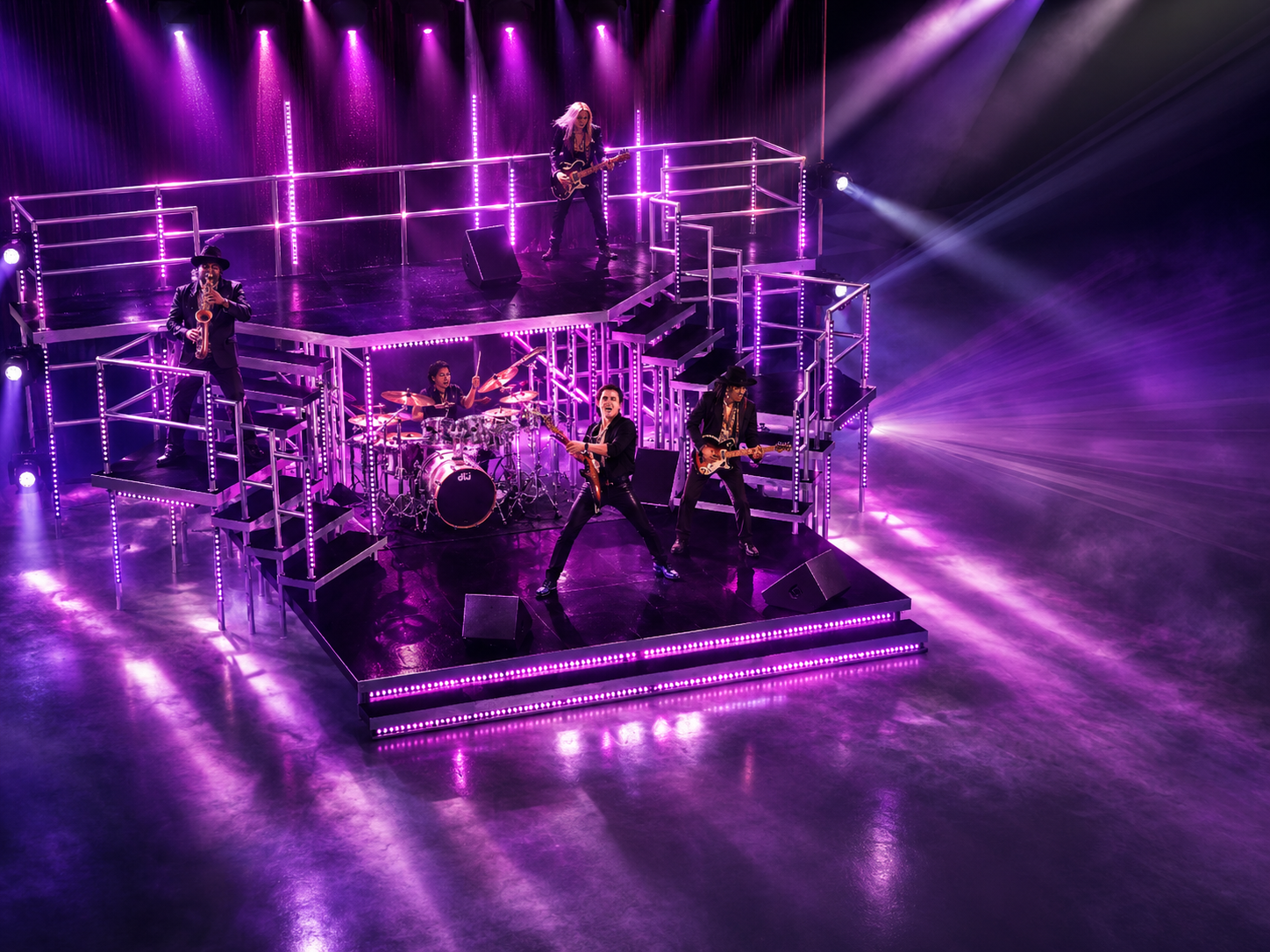
New Pic 2026 © 2026 Me & Bo Life - Design
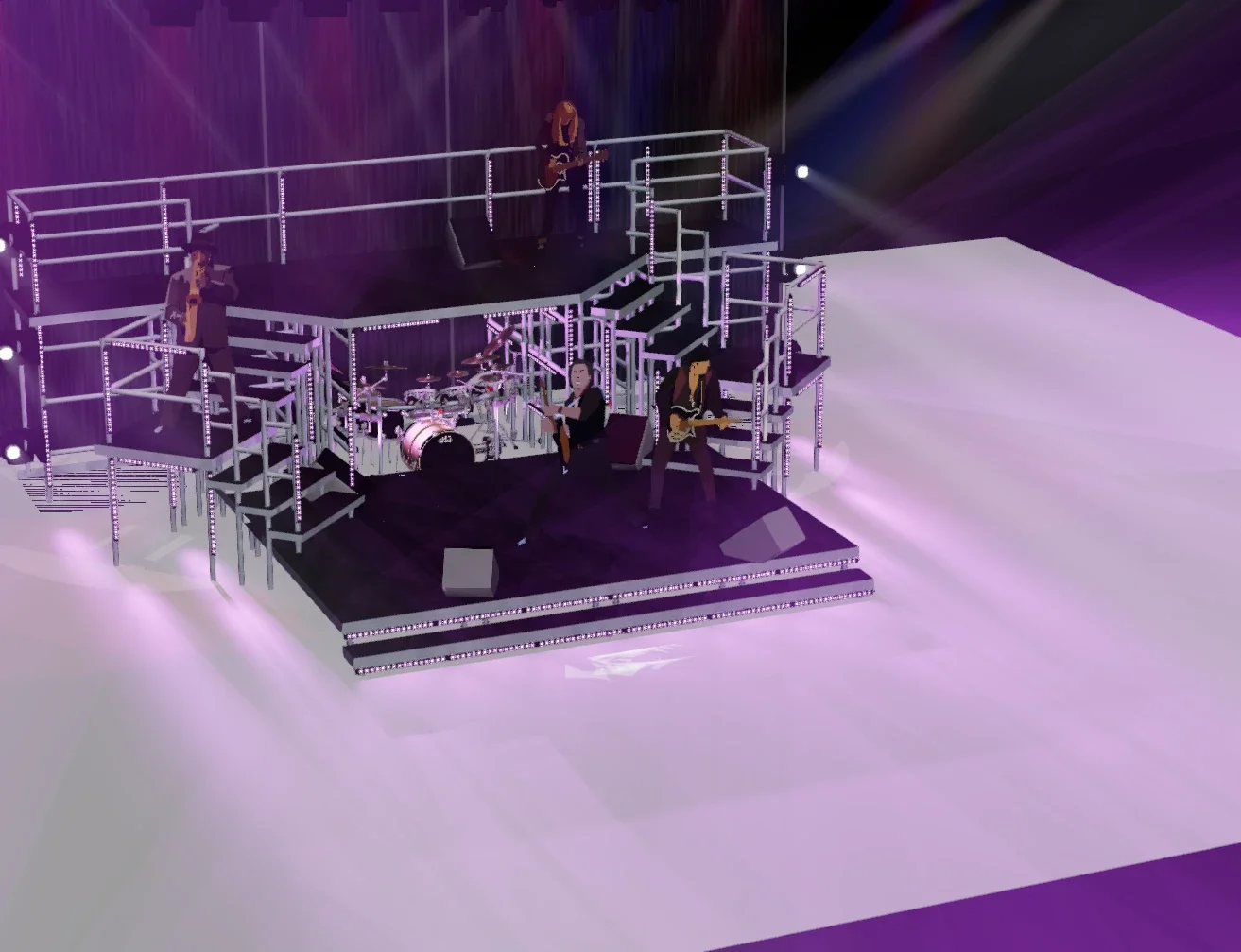
Old pic 2015 © 2026 Me & Bo Life - Design
The Image Is Not Reality
AI is a fantastic tool for visualizing ideas. It helps us communicate. It helps us sell a feeling. It helps investors, partners, clients, and audiences understand what we mean. For many people, a technical drawing is dead. They see lines, measurements, and symbols, but they feel nothing. An AI-enhanced image, on the other hand, can create immediate understanding.
“So this is what it could feel like.”
That is powerful.
But the image also lies.
Not intentionally. But it has no body. It has no cold. It has no wind. It has no rain searching its way through tiny gaps. It has no mud after three days of audience wear. It has no cables that need to be routed in a way that does not create a tripping hazard. It has no truck that cannot make the turn around the corner. It has no ground that slopes four centimeters more than anyone expected. It has no local supplier who says everything is ready, where “ready” means something entirely different from what you mean.
AI can create a beautiful outdoor arena at sunset. But does it understand what happens if the wind comes from the wrong direction?
AI can create a stage with a spectacular LED backdrop. But does it understand how much front light is needed so the artist does not disappear against the screen?
AI can create a tent that looks inviting and warm. But does it understand how condensation forms when people breathe, the temperature drops, and ventilation is not enough?
AI can place an audience neatly in front of a stage. But does it understand panic flows, evacuation routes, barrier pressure, bottlenecks, and the human instinct to always move toward the same exit?
No.
AI sees the image. Experience sees the consequence.
Building Outdoors Is Not the Same as Building Indoors
One of the greatest differences in event design is the difference between indoors and outdoors. To the inexperienced eye, it may look like the same thing. A stage is a stage. An audience area is an audience area. A light is a light. A sound system is a sound system.
But reality is different.
Indoors, you usually have a room. You have a roof. Walls. Power. Loading access. Perhaps rigging points. Perhaps fire systems. Perhaps fixed ventilation. You have limitations, but you also have a structure that already exists. You work within a frame.
Outdoors, you build the frame yourself.
You build against nature.
The ground is rarely level. The weather is never guaranteed. The temperature changes. Day and night can be two completely different worlds. A stage that looks fantastic at 6:00 p.m. can become dangerous at 2:00 a.m. if moisture settles on floors, stairs, and cables. An audience area that works perfectly in dry weather can become a field of mud after heavy rain. A beautiful entrance can become a blockage if people are trying to enter, leave, smoke, buy food, find toilets, and locate their friends at the same time.
Outdoors, it is not just about design. It is about the ability to foresee the unpredictable.
That requires having been there.
Having experienced the wind catching a banner. A tent starting to move. A stage build being delayed because the ground cannot carry the load. A forklift getting stuck. Rain making everything take twice as long. Heat slowing down the crew. Cold making fingers stop working properly. The audience not behaving like that perfect little group of AI-generated people in the image.
Because an audience is never an image. An audience is living mass.
It moves, pushes, stops, turns suddenly, gathers, spreads out, becomes hungry, becomes tired, becomes drunk, becomes happy, becomes irritated, becomes frightened, becomes ecstatic. And the design has to handle all of it.
Temperature Is Also Part of the Design
When people talk about event design, they often talk about lighting, stage, shape, color, and experience. But temperature is also design. Wind is design. The direction of the sun is design. Shade is design. Rainwater is design. Ground surface is design.
A place can be beautiful but unusable.
Will the audience stand in direct sunlight for several hours? Is there shade? Can the queues for food and drinks be handled in heat? Are there water points? Can the staff work safely? How is the technology affected? How are LED screens affected? How is the sound affected by wind direction? How does the experience change when the sun goes down and the temperature falls?
In cold environments, the questions are different. Where can the audience warm up? How long can staff stand still? How are instruments protected? How do batteries function? How are cables affected? How is the risk of slipping handled? How quickly can action be taken if someone becomes too cold?
These are not side details. They are the core.
An event is not only what is visible in the image. It is everything that happens in and around the image.
The Surroundings Shape the Experience
Another thing AI often misses is the importance of the surroundings. An event never happens in a vacuum. It happens in a city, on a site, in an area, in a landscape, in a culture, in a climate, in a reality.
If you build in an industrial area, you create a different feeling than if you build on a town square. If you build in an old city center, you must consider residents, noise, transport, cultural heritage, and limited access. If you build near mountains, you get winds, level differences, and a drama that can be fantastic but also demanding. If you build near water, you get reflections, moisture, wind, and safety issues. If you build in a country where the practical infrastructure works differently from what you are used to, you need to understand that before you start drawing too big.
It is easy to create an image of a spectacular arena. It is harder to understand how the trucks will get in, where materials will be stored temporarily, how staff will eat, where security guards will stand, how power will be routed, who is responsible if something goes wrong, and how quickly spare parts can be obtained.
Experienced event design does not begin with the question: “How should it look?”
It begins with: “Where are we?”
And then: “What does the place allow?”
Because the place is never passive. The place answers back.
AI as an Amplifier – Not a Replacement
That is why I see AI as an amplifier, not a replacement. AI can give old ideas new life. It can help us show what we once could only explain with our hands in the air. It can make a vision suddenly understandable to someone who is not used to reading drawings or thinking spatially.
But AI cannot replace practical experience.
It cannot replace having built, dismantled, carried, solved, organized, failed, saved, improvised, and delivered. It cannot replace 30 years of knowing how people, technology, weather, materials, and stress work together.
It cannot replace that look that moves across a site and immediately sees the problems:
There will be a queue there.
The truck will not get in there.
It will be too windy there.
The audience will cut through there.
Lighting is needed there.
That area will become dark.
We need staff there.
The sound will bounce there.
Water will run that way.
That is where the risk is.
AI cannot have that look, because it has never stood in the mud.
The Old Idea Was Maybe Not Wrong – Just Too Early
Many ideas created ten or fifteen years ago can look new today. Not because they were bad then, but because technology, materials, audiences, and presentation tools have caught up.
There is something important in that.
An idea can be ahead of its time. It can remain dormant. It may lack the right tools. It may be difficult to explain. It may be misunderstood. It may seem too expensive, too odd, too impractical, or too hard to sell.
But then the world changes.
AI makes visualization easier. Projection mapping becomes more accessible. LED technology becomes lighter and better. Sound systems become more precise. Temporary building systems become smarter. Digital communication makes it easier to find partners. Audiences become more used to immersive experiences. What once looked like a crazy idea can suddenly feel completely right.
That does not mean the idea is automatically feasible.
But it does mean it is worth looking at again.
Old sketches are not old if the thinking behind them is still alive.
Event Design Requires Both Imagination and Responsibility
There is a romantic image of creativity where everything is about thinking freely. And yes, one must think freely. Without imagination, events become only logistics. Then they become functional but dead. Then they become fences, toilets, entrances, and stages without soul.
But without responsibility, creativity becomes dangerous.
Event design must carry both sides.
It must dare to create something people remember. Something that makes them pause. Something that changes the place. Something that makes people feel they have experienced more than just an arrangement. But at the same time, it must handle weights, winds, flows, regulations, safety, budget, staffing, and reality.
It is in that balance that professional skill exists.
The person who is only practical often says no too early.
The person who is only creative often says yes too easily.
The true event designer must be able to say: “Yes, but this is how we must do it for it to work.”
That is where experience becomes creativity’s best friend.
From Image to Buildable Reality
When I now bring out old images and make them more alive with AI, I do not see only something visual. I also see the work behind it. I see the build days. I see the material lists. I see the staffing needs. I see the schedule. I see the risks. I see what is missing. I see which questions must be asked before anyone falls in love with the image.
How large is the structure?
Which system are we building with?
How is it anchored?
What does it weigh?
How does the material get there?
How long does the build take?
Which professional roles are required?
What happens if it rains?
What happens in strong wind?
How is the audience affected?
How are the neighbors affected?
How are artists and crew affected?
What does operation cost?
How is everything dismantled afterward?
Where does the material go?
These are the questions that separate a good-looking rendering from an executable idea.
And this is also where the future exists.
Not in allowing AI to replace knowledge, but in allowing AI to make knowledge visible.
The New Role: Experience Strengthened by AI
I believe the event designer of the future is not only a scenographer, technician, project manager, or creative. It is someone who can move between worlds. Someone who can speak with AI, but also with riggers. Someone who can create an image, but also understand why the image must be changed. Someone who can sell a vision to an investor, but also stand on site and know why a solution does not work.
It is a role where experience becomes even more important, not less.
Because when everyone can create fantastic images, the need increases for people who can determine which images actually mean something.
Which are just fantasies?
Which can be built?
Which can be adapted?
Which are worth developing?
Which are dangerous?
Which are possible, but require the right team?
AI democratizes visualization. But it does not democratize understanding of reality. That still has to be earned through work, mistakes, responsibility, and years in the field.
Final Words: The Image Can Begin the Conversation, But Experience Must Lead It
I love that old event images can gain new life. I love that an idea from ten or fifteen years ago can suddenly feel relevant again. I love that AI can help me show others what I already saw back then. Not perfectly. Not finished. But alive.
But I also know that the image is only the beginning.
The real question is never only: “Can we create this?”
The real question is: “Can we build this so that it works for the people, the place, the weather, the technology, the budget, and the safety?”
That is where event design becomes a profession.
That is where the image leaves the screen and enters reality.
And that is where experience is still invaluable.
Because AI can give life to an old idea.
But it takes people who have lived in reality to know whether the idea can stand when the wind comes.

By Chris...

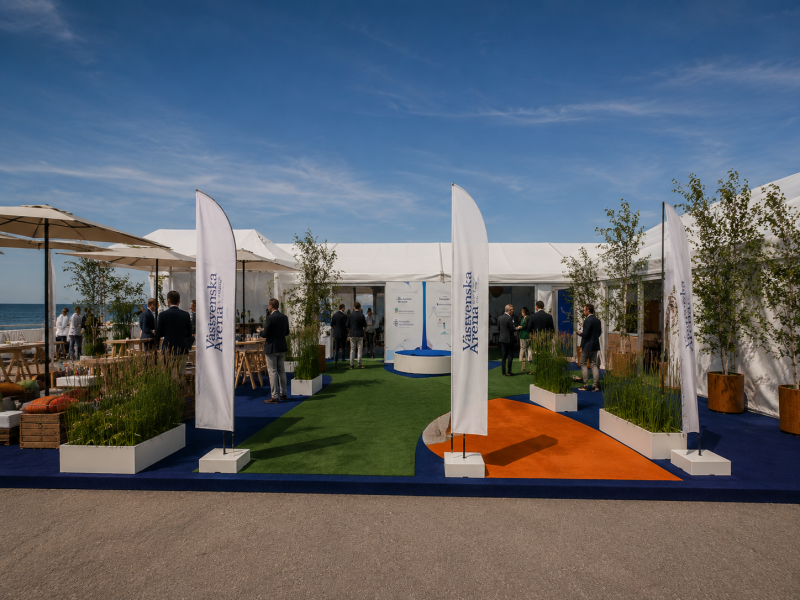
Old 3D 2015.© 2026 Me & Bo Life - Design
AI 2026 © 2026 Me & Bo Life - Design

Old 3D 2015.© 2026 Me & Bo Life - Design
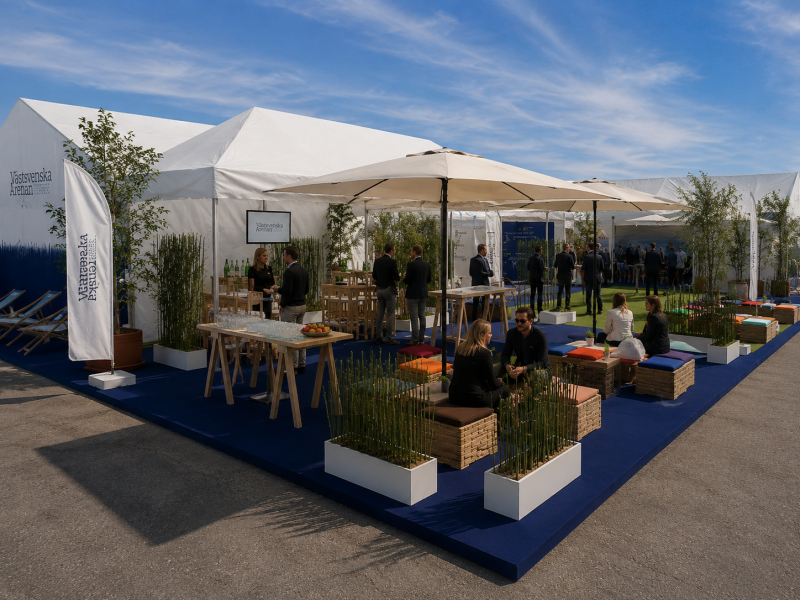
AI 2026 © 2026 Me & Bo Life - Design

Old 3D 2015.© 2026 Me & Bo Life - Design
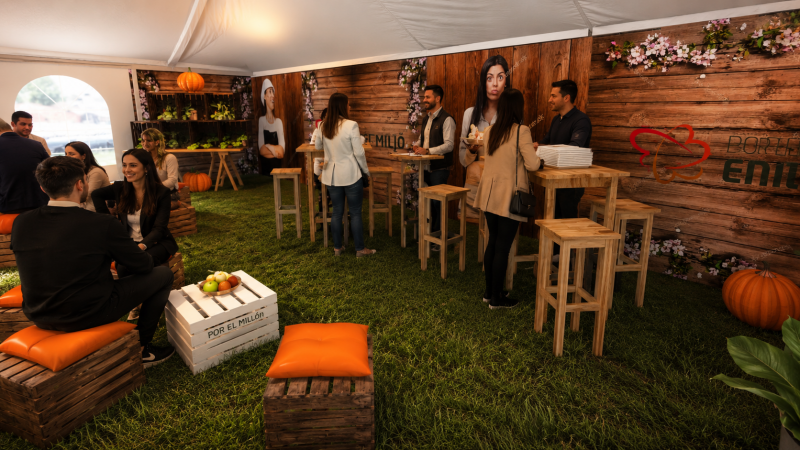
AI 2026 © 2026 Me & Bo Life - Design

Old 3D 2015.© 2026 Me & Bo Life - Design

AI 2026 © 2026 Me & Bo Life - Design

Old 3D 2015.© 2026 Me & Bo Life - Design
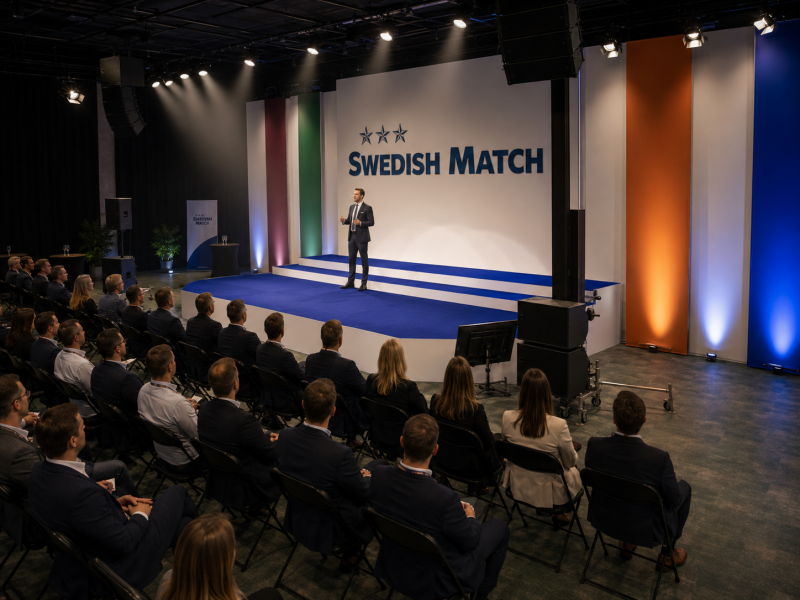
AI 2026 © 2026 Me & Bo Life - Design
Add comment
Comments