

There are films that are simply shot in a country. And then there are films that say something about the country in which they are made.
Lucky Strike, directed by Rod Lurie and starring Scott Eastwood, is one of those films. On the surface, it is an American World War II thriller about a soldier trapped behind enemy lines, about survival, fear, duty and human endurance. But beneath the surface, there is something more. It is also a story about how Bulgaria, and above all Nu Boyana Film Studios in Sofia, has become part of the machinery of the global film industry.
What was once a state-owned film studio during the communist era has today become a place where American war films, action movies, historical dramas and international productions can be built, lit, filmed and completed. There is something almost poetic about that. A studio born inside a closed system has become a gateway to the world.
And that is exactly why Lucky Strike is interesting far beyond the film itself.
A Lone Soldier in the Chaos of War
In the interview with Scott Eastwood, the film is presented as a World War II thriller in which he plays an American soldier who ends up behind enemy lines after an ambush. The setting is the Battle of the Bulge, the Ardennes Offensive, Germany’s last major offensive on the Western Front. Winter, cold, fear and military desperation form the backdrop.

But Scott Eastwood does not primarily describe the film as a traditional war movie. He calls it a one-man survival story. A story about one man’s struggle to survive, but also about what war does to the human psyche.
That is an important difference.
Many war films are built around large battles, massive explosions, troop movements and heroic moments. But the strongest war films are often about something much smaller: a human being forced to make decisions while everything around him is falling apart.
War on film can easily become spectacle. But real war is not spectacle. It is cold, confusion, hunger, dirt, fear, noise, waiting and people trying to understand what the next second demands of them. That seems to be where Lucky Strike wants to place itself. Not only in the external war, but in the internal one.
Scott Eastwood and the Shadow of His Legacy
Scott Eastwood carries a surname that is impossible to ignore. Clint Eastwood is not just an actor. He is a piece of American film history. Westerns, war films, police dramas, moral ambiguity, silence, toughness, discipline and directing — it is all there.
But in the interview, Scott Eastwood does not seem to be running from that legacy. Rather, he seems to understand its weight without allowing it to suffocate him.
When asked whether he wants to step behind the camera himself, he says that one day he would like to direct, probably something in the action genre. That is interesting. Perhaps he has the same attraction to physical cinema: people in motion, danger, bodies, courage, choices and consequences.
But in Lucky Strike, he is still in front of the camera. And this role requires something more than physical presence. A one-man survival story demands that the audience be willing to follow a person through fear, exhaustion and inner struggle. There are no large ensembles or grand battlefields to hide behind. The camera comes close. It demands presence.
That is where films like this either live or die.
Rod Lurie – The Director Who Understands the Weight of Military Life
An important detail about Lucky Strike is its director, Rod Lurie. He is not only a filmmaker, screenwriter and producer, but also a former officer. Lurie was born in Israel in 1962, grew up in the United States and graduated from the United States Military Academy at West Point in 1984. He later served as an officer in the United States Army’s Air Defense Artillery.
That background makes him particularly interesting as the director of a war film. He does not approach military stories merely as drama, but with an understanding of discipline, hierarchy, responsibility and the mental pressure that comes with war and military life.
Before becoming a director, Lurie worked as a journalist, film critic and entertainment reporter. That gave him another perspective on the film industry: both from the inside and the outside. In several of his films, he has moved between politics, morality, power and military structure. His filmography includes Deterrence, The Contender, The Last Castle, Nothing but the Truth, Straw Dogs, The Outpost, The Senior and now Lucky Strike.
Particularly important in this context is The Outpost, Lurie’s 2020 war film about the Battle of Kamdesh in Afghanistan. That film was strongly praised for its combat scenes and its portrayal of soldiers. It showed that Lurie could handle war cinema without simply making action. He could also show the human beings behind the uniforms.
That makes Lucky Strike more interesting. When Lurie now returns to the war film with Scott Eastwood in the lead role, it is not only about explosions, weapons and historical environments. It is about what war does to a human being. It is about survival, duty, fear and psychological endurance.
With his military background, his experience as a journalist and his previous experience with war cinema, Rod Lurie is a logical name for such a story.
And when the film is also shot in Bulgaria, at Nu Boyana Film Studios in Sofia, several worlds meet: American military history, Hollywood production, European film expertise and Bulgaria’s growing role as an international filming location.
Bulgaria as the Landscape of War
For those of us who are in Bulgaria, the most interesting thing is, of course, that the film was shot here, at Nu Boyana Film Studios in Sofia.
For many outside the film industry, Bulgaria may still seem like an unexpected name in this context. But for the international film industry, the country has long been a practical and economically attractive production location. Here there are studio spaces, constructed environments, technicians, craftspeople, set designers, costume departments, weapons props, vehicles, post-production facilities and access to many different types of landscapes.
Nu Boyana is not just a studio. It is a film city.
There, you can build an American street, a Roman environment, a war zone, a European village, a palace, a ruin or a military area. That is exactly the kind of flexibility film productions are looking for. Not only cheap. Not only simple. But possible.
And that is where Bulgaria has its strength.
The country still has a kind of rawness, an untouched quality, a mixture of old and new that makes it cinematically useful. There is architecture from several eras. There are mountains, forests, abandoned industrial sites, socialist monuments, modern offices, old villages and urban environments that can be transformed into many different parts of Europe.
For a war film, it is a goldmine.
From Communist Film Factory to Hollywood Engine
The history of Nu Boyana is a film in itself.
The studio opened in 1962 as Boyana Film Studio and was, during the communist era, the center of Bulgarian film production. At that time, film was a cultural and political tool. The state controlled the stories. Film could be art, but also propaganda, education and national identity.
After the fall of communism, everything changed. Bulgaria had to find a new role. The film industry, like so much else, was forced into a new economic reality. When the studio was later privatized and became part of Nu Image/Millennium Films, the door opened to international productions.
It is easy to romanticize this. But the reality is more complex.
An international film studio creates jobs, skills, contacts and visibility. At the same time, the country risks becoming only a place where others tell their stories. Bulgaria becomes a backdrop, not a storyteller. A workplace, not a sender.
That is where the real opportunity lies.
Because if Bulgaria can be the place where Hollywood builds its worlds, then Bulgaria should also be able to become the place where its own stories are developed for the world.
Film Production Is Not Glamour – It Is Logistics
As an audience, we see the actors, the trailer, the poster, the red carpet and the interviews. But behind a film like Lucky Strike, there is an enormous machine.
War films require especially much.
It is about weapons, safety, special effects, stunts, vehicles, uniforms, makeup, blood, snow, smoke, mud, sound, light, transport, food, accommodation, permits, extras, historical research and hundreds of practical decisions every day. Such a production is not only art. It is military logistics in civilian form.
And this is where a studio like Nu Boyana shows its value.
A film studio is not just walls and cameras. It is an ecosystem of people who know how to get things done. Carpenters, painters, electricians, riggers, drivers, production assistants, costume designers, weapons technicians, stunt coordinators, location managers, lighting technicians, sound technicians, catering staff and security personnel.
They are the ones who make the illusion work.
They are rarely seen in the interviews. But without them, there is no film.
Why This Matters for Bulgaria
When an international film like Lucky Strike is shot in Bulgaria, it means more than a few weeks of work in a studio. It means that Bulgaria becomes part of a global conversation.
Actors come here. Directors come here. Producers come here. Technicians come here. They eat in restaurants, stay in hotels, hire local companies, meet local staff and take their experiences home with them.
A successful production becomes more than a film. It becomes a business card.
And at a time when Bulgaria is trying to define its future in technology, culture, tourism, IT, AI and international cooperation, the film industry is an underestimated bridge. It connects creativity, technology, logistics, education and national attractiveness.
It is exactly the kind of industry that can give young people reasons to stay, learn, grow and build something larger.
But that requires Bulgaria not to settle for being a low-cost production market. Bulgaria must dare to see itself as a creative nation. Not only as a place where others shoot their films, but as a place where the stories of the future can be born.
The Strange Power of War Cinema
There is something strange about our fascination with war films. We know that war is terrible. And yet we return to these stories again and again.
Perhaps it is because war films strip away everything unnecessary. There are no comfortable illusions left. The human being is placed before the great questions: What is courage? What is fear? What is duty? What is loyalty? What do you do when no one is watching? What do you do when orders are no longer enough as a moral compass?
In Lucky Strike, the focus seems to be on exactly those kinds of questions. One man. A radio. The enemy nearby. Survival as the only goal, but not without consequences.
Scott Eastwood speaks in the interview about the importance of honoring military personnel and veterans. It is a recurring theme in American cinema, but it can also become problematic if it turns into nothing more than patriotic surface. What is interesting is when the film dares to show both the courage and the damage. Both the strength and the price.
War creates heroes, but it also destroys people. A good war film must contain both truths.
Between Hollywood and Reality
There is always a risk when Hollywood makes historical war films. Reality is simplified. Heroism is polished. The enemy becomes a symbol. History is adapted to the needs of drama.
But the task of film is not always to be documentary. Sometimes the task of film is to create an emotional entrance into a historical event. If the audience afterwards wants to know more about the Battle of the Bulge, about the conditions of the soldiers, about Europe in the winter of 1944, about what people actually experienced, then the film has done something important.
And perhaps that is where Lucky Strike can find its place.
Not as the biggest war film. Not as the most epic. But as an intense story about a human being inside the machinery of war.
Bulgaria Should Seize the Moment
For Bulgaria, there is a larger question here: What does the country do with this kind of international attention?
It can let it pass. A film is shot, the team goes home, the film premieres, and everything moves on.
Or it can be seen as part of a larger strategy.
Every international production should be connected to education, local networks, workshops, internships, technological development and cultural confidence. If Scott Eastwood, Rod Lurie and an American war drama can come to Sofia to create a world-class production, then Bulgaria should also be able to gather young filmmakers, technicians, set designers and producers and say:
Look. This is happening here. This is not far away. This is possible.
Because that is often where development begins. Not in political speeches, but in concrete examples.
A young Bulgarian electrician working on an American film production learns more than technique. He or she learns tempo, demands, communication, safety and international standards. A young director who sees what is being built at Nu Boyana can understand that the dream does not have to begin in Los Angeles. It can begin in Sofia.
Lucky Strike as a Symbol
Perhaps Lucky Strike is only another film in the long line of international productions shot in Bulgaria. But it can also be seen as a symbol.
A film about a man behind enemy lines, shot in a country that itself once lived behind a historical and political line. A film about survival, created in a studio that survived the collapse of an entire social system. An American war story built in a Bulgaria that is still trying to define its place between old and new, East and West, history and future.
That is where the film becomes larger than its plot.
Because film is never only about what the camera shows. It is also about where the camera stands.
And in this case, the camera stood in Bulgaria.
Final Thoughts
When Scott Eastwood tells the story of the 107-year-old veteran who took his hand and said they had got it right, there is something that cuts through all the noise. Film can be industry. Film can be money. Film can be marketing. Film can be career.
But sometimes film is also an attempt to remember.
Lucky Strike seems to want to remember a soldier, a battle, a psychological struggle and a piece of history. At the same time, the film reminds us of something else: Bulgaria is no longer outside the international film world. The country is already part of it.
The question now is what Bulgaria does with that position.
Nu Boyana can build sets for Hollywood. We already know that. But the next step should be for Bulgaria to build its own stories with the same power, the same professionalism and the same confidence.
Somewhere between an American soldier in the Ardennes, Rod Lurie’s military experience and a film studio at the foot of Vitosha, there is a larger story.
A story about survival.
A story about craftsmanship.
A story about Bulgaria as a film nation.
And perhaps that is where Lucky Strike hits the hardest.
Can't wait until it's released in Europe!

By Chris...
The Sons of Clint Eastwood and Tom Hanks Are Fighting Nazis in Bulgaria
Credit: Original Bulgarian article by Boryana Kolchagova, Bo from Me & Bo Life, published in Bulgaria Dnes on December 4, 2024.
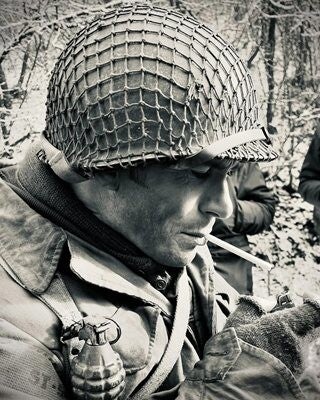
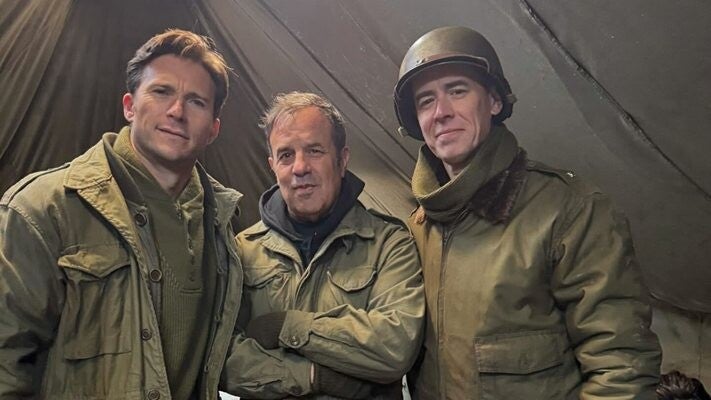
The Bulgarian article reports that the World War II film Lucky Strike is being shot in Bulgaria, mainly around Sofia and at Nu Boyana Film Studios. The production features Scott Eastwood, son of Clint Eastwood, and Colin Hanks, son of Tom Hanks, in leading military roles. According to the article, Eastwood plays a brave captain, while Hanks appears as a composed colonel.
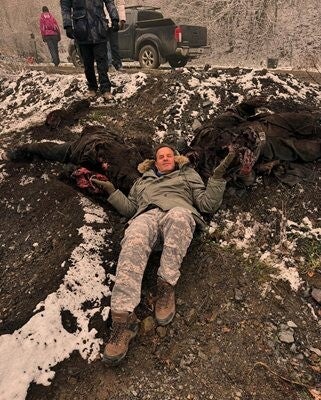
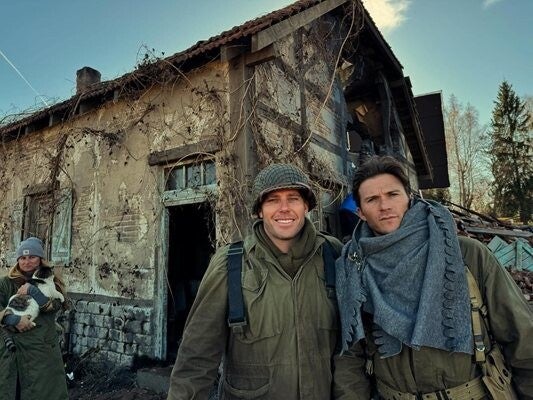
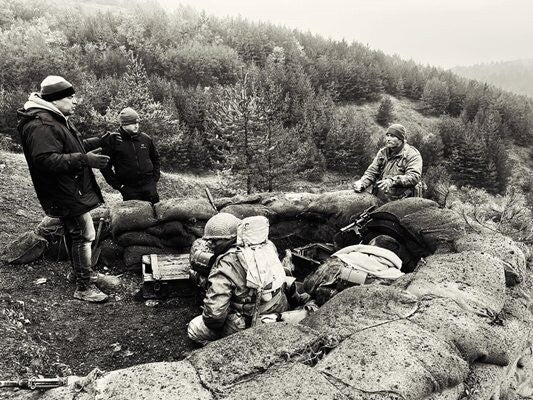
The filming includes scenes with MP40 submachine guns, tanks, soldiers, battlefield action and World War II settings in the forests and locations around Boyana. The production has reportedly used several different Bulgarian locations, including outdoor fields and a ruined house where key scenes take place.
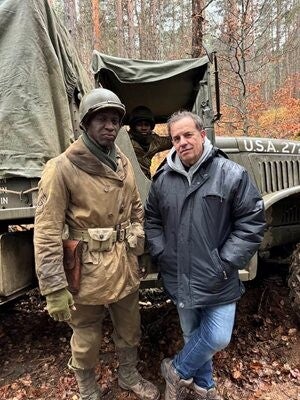
Director Rod Lurie has shared behind-the-scenes material from the set, including photos with Scott Eastwood and Colin Hanks. He described being on the set of Lucky Strike with “Captain Eastwood” and “Colonel Hanks.” Lurie has also posted joking comments about the action scenes, including references to fighting Nazis on set.
The Bulgarian article highlights that the crew spent several weeks working in Bulgaria, even spending Thanksgiving in the country while filming scenes involving tanks and machine guns. Some shooting days were extremely cold, but the cast and crew were described as dedicated and committed.
Scott Eastwood is also said to be difficult to persuade not to perform his own stunts, although the production has a stunt double, Pat Millin, who is praised by the team. The article also mentions that Bulgarian viewers and film followers have reacted enthusiastically to Eastwood’s appearance in uniform.
The film most likely deals with the Battle of the Bulge, which began in December 1944 and was Nazi Germany’s last major attempt to push back the Allied forces on the Western Front. Bad weather initially made it difficult for American forces to stop the offensive, resulting in heavy casualties before the Allies eventually prevailed.
The article also notes the authenticity of the sets and props, including detailed interiors and military vehicles. A Panzer IV tank is mentioned as part of the production, described as a German tank used by the Wehrmacht and assembled piece by piece for film productions.
Another detail from the set is the white mare Togo, which Rod Lurie reportedly admired. He wrote that beauty can be found everywhere, even in a film about the Battle of the Bulge, and joked that he might want to take the horse home after finishing the film.
The article also gives background on Rod Lurie. He graduated from the United States Military Academy at West Point in 1984 and served as an officer in the U.S. Army’s air defense branch before becoming a journalist, film critic and filmmaker. His previous films include The Contender, The Last Castle and Nothing but the Truth.
Overall, the article presents Lucky Strike as another major international film production being made in Bulgaria, showing how Nu Boyana and the Sofia region continue to attract Hollywood projects involving well-known actors, historical settings and large-scale action scenes.
Original source: Bulgaria Dnes
Original author: Boryana Kolchagova – Bo from Me & Bo Life
Original publication date: December 4, 2024
Producer Jonathan Yunger: Politics Is Killing Hollywood
Credit: Original Bulgarian article by Boryana Kolchagova, Bo from Me & Bo Life, published in Bulgaria Dnes on December 18, 2024.
The Bulgarian article presents an interview with American producer and actor Jonathan Yunger, who has worked with Millennium Films / Nu Image since 2011 and has been involved in more than 50 films. His credits include major international productions such as The Expendables franchise, Olympus Has Fallen, London Has Fallen, Angel Has Fallen, The Hitman’s Bodyguard and Hitman’s Wife’s Bodyguard.
In the interview, Yunger talks about his latest work on the World War II film Lucky Strike, starring Scott Eastwood and Colin Hanks. The film was shot in Bulgaria, with production work taking place around Sofia, including Buhovo, Plana Mountain and Nu Boyana Film Studios.
According to Yunger, the production arrived in Bulgaria at the beginning of October, with cameras rolling from November 7. The team worked under difficult conditions, often filming outdoors from dawn until dark in very cold weather. Twelve days were spent filming in Plana Mountain, where the weather became one of the biggest challenges for the crew.
The production used large-scale World War II military equipment, including vehicles such as Hanomags, American GMC trucks and other battlefield machinery. Yunger explains that the crew initially feared that the weather or the heavy military equipment could cause serious problems, but the vehicles performed well and were returned in excellent condition.
Lucky Strike is described as a powerful story set against the background of the Battle of the Bulge. The film follows ordinary people placed in extraordinary and extreme circumstances. Yunger emphasizes that the story is not about elite soldiers or superhuman action heroes, but about normal people who discover courage when life forces them into impossible situations.
In the film, Scott Eastwood plays a captain and engineer whose mission is to cross enemy lines and place traps and explosives. Yunger describes Eastwood as humble, honest, kind and completely without ego — qualities he believes are essential for such an intense production. Colin Hanks plays an older colonel, a calm and serious officer who avoids empty talk, gives orders and cares deeply about the safety of his men.
The article also notes that actor Taylor John Smith, who previously appeared in The Outpost, is part of the cast. Director Rod Lurie, who also directed The Outpost, returns to the war genre with Lucky Strike. Yunger explains that both films share a concern with fundamental human questions: The Outpost asked why people fight, while Lucky Strike asks why people survive.
Yunger says the story has roots in a real World War II account. Screenwriter Mark Friedman, who had previously worked with the same team in Bulgaria, based the film on a story he heard from a veteran. The script also takes creative freedom, using a dramatic structure that begins in 1950 before moving back into the wartime action of the Battle of the Bulge.
Another important theme in the film is the role of women after the war. Yunger explains that the film touches on the women who worked in American factories during World War II, producing ammunition and other materials for the war effort. After the war, many of these women lost their jobs, and many women of color were left without the bonuses, money or recognition they deserved.
During the interview, Yunger also speaks warmly about Bulgaria. He praises Bulgarian people as generous and professional and notes that Scott Eastwood has already shot several films in the country. Although the crew worked six days a week and had little free time, Yunger says they enjoyed Bulgarian food, especially shopska salad, kyufteta and shkembe chorba.
One of the most emotional parts of the interview concerns Rod Lurie’s earlier film The Outpost. Yunger recalls that shortly before filming began, Lurie’s son died in an accident at the age of 27. Despite this tragedy, Lurie continued with the production. Yunger describes how the crew worked in silence, dedication and perfect sync, and how a Bulgarian special effects specialist created fireworks in memory of Lurie’s son — a moment he describes as unforgettable.
The interview ends with Yunger’s reflections on Hollywood and European cinema. He criticizes what he sees as excessive politics in Hollywood filmmaking, arguing that political correctness can limit humor, creativity and artistic risk. He contrasts this with European cinema, where he believes there is more freedom to tell stories about real people.
Yunger also comments on Hollywood’s focus on franchises and superhero films, noting that while he understands the business side of productions like Marvel films, he personally values films that take creative risks. For him, filmmaking should still leave room for experimentation, uncertainty and human stories that do not always follow a safe formula.
Overall, the article presents Jonathan Yunger as a producer who values human storytelling, practical filmmaking, international crews and the creative possibilities that Bulgaria offers. Through Lucky Strike, the interview also highlights the continued importance of Nu Boyana Film Studios and Bulgaria’s growing role as a production hub for international cinema.
Original source: Bulgaria Dnes
Original article: Producer Jonathan Yunger: Politics Is Killing Hollywood
Original author: Boryana Kolchagova – Bo from Me & Bo Life
Original publication date: December 18, 2024
Add comment
Comments