

We have gained the freedom to work from almost anywhere in the world. But have we simultaneously lost some of our ability to feel at home somewhere? Adam Neumann's story of WeWork's spectacular rise and collapse raises a much bigger question than why a multibillion-dollar company failed. It is a story about the future of work, digital nomadism, human connection, and why the next revolution may not be about building bigger companies, but about creating better communities.
A Billion-Dollar Empire Built on the Human Need for Community
When Adam Neumann founded WeWork together with Miguel McKelvey in 2010, the idea appeared relatively simple. The company would offer flexible workspaces in attractive environments. But behind the desks, coffee machines, and open-plan offices was a much more ambitious vision.
Neumann wanted to transform people's relationship with work and community. It was not simply about creating places where people could earn a living, but about developing environments where they could also build meaningful lives.
In an extensive interview with Steven Bartlett on The Diary of a CEO podcast, Neumann explains how this vision evolved into a global company valued at approximately $47 billion in 2019.
But growth came at a price!
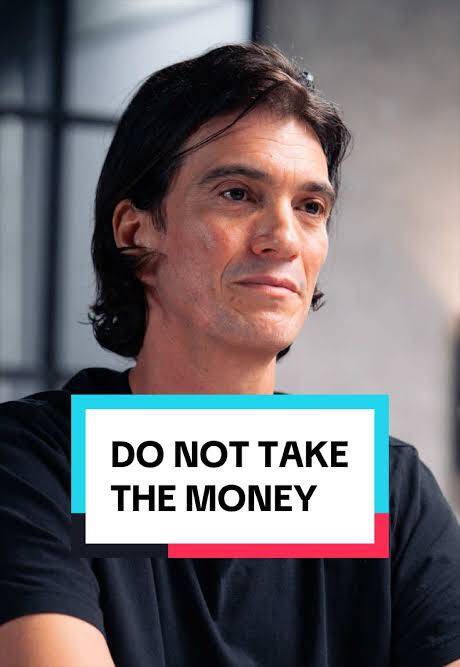
WeWork expanded rapidly, accumulated substantial financial obligations, and built an organization that eventually became difficult to control. Its planned initial public offering collapsed in 2019 following scrutiny of the company's losses, corporate governance, and conflicts of interest. Neumann stepped down as CEO, and four years later, in November 2023, WeWork filed for Chapter 11 bankruptcy protection in the United States.
During the interview, Neumann offers an observation that deserves attention far beyond the business world:
"In WeWork, the business grew faster than I could grow."
The company grew faster than the person behind it.
That single sentence also captures something important about today's digital nomad culture.
The Freedom to Work from Anywhere
Over the past two decades, technology has gradually broken the traditional connection between work and geographical location.
Tasks that once required offices, local servers, administrative staff, and physical meetings can now often be handled through a laptop, an internet connection, and a collection of digital services.
The pandemic accelerated this transformation, but the shift had begun long before COVID-19.
According to MBO Partners, approximately 18.5 million American workers identified as digital nomads in 2025, representing a substantial increase compared with 2019. This figure refers specifically to the United States and should not be confused with a global estimate.
Meanwhile, digital nomadism has evolved from a relatively narrow lifestyle choice into an international working culture.
Programmers, writers, consultants, designers, entrepreneurs, digital marketers, and professionals from numerous other fields can now work from destinations they might previously have visited only on holiday.
Bali, Madeira, Lisbon, Chiang Mai, Medellín, and Bansko are examples of places that have attracted international attention within the digital nomad movement.
But there is a strange contradiction hidden inside this freedom.
The less dependent we become on a fixed workplace, the more responsibility we assume for creating the social connections that workplaces traditionally provided.
We no longer need to visit an office to perform our work.
But we still need human interaction.
And perhaps that is where the real challenge begins.
Coworking – A Desk or a Social Ecosystem?
Coworking spaces are frequently marketed through their practical advantages: high-speed internet, comfortable furniture, meeting rooms, coffee, quiet working areas, and the flexibility to rent a desk for a day or a month.
These services are useful, but they are rarely enough to create lasting loyalty.
Someone who can work from home does not necessarily need another desk. What may be missing is something far more difficult to purchase.
A sense of belonging.
The most interesting coworking environments therefore function as more than offices. They become social meeting places where people establish relationships, exchange experiences, develop ideas, and sometimes launch new businesses together.
This brings us back to WeWork's original vision.
Neumann understood that the workplace could become a platform for human relationships. But WeWork attempted to scale that community through an extraordinarily capital-intensive international real estate organization.
This raises a fundamental question: Can genuine community really be mass-produced?
Furniture, booking systems, customer service, and architecture can all be standardized.
It is even possible to create an atmosphere that feels recognizable across different countries.
But friendship, trust, and belonging do not necessarily follow the same business logic.
A community develops between people, not between square meters.
Digital Nomads and the Paradox of Loneliness
Digital nomadism is commonly associated with freedom, adventure, and personal fulfillment.
Social media presents images of people working from rooftop terraces, tropical beaches, mountain villages, and exotic cafés. These pictures can create the impression of a lifestyle without limitations.
Reality is considerably more complex.
The freedom to travel continuously also means regularly leaving relationships, routines, and familiar environments behind.
Every new destination may require new friendships, an understanding of different cultural expectations, and another attempt to establish a social network.
Many people genuinely enjoy that process. Others discover after several years that constant movement can become exhausting.
Research into digital nomadism has identified loneliness and difficulties maintaining long-term relationships as potential challenges associated with the lifestyle.
There is an important difference between constantly meeting new people and genuinely feeling at home among them.
Someone can have hundreds of contacts from coworking spaces around the world and still lack a trusted friend to call when life becomes difficult.
This is also one of the most interesting elements of Neumann's personal story. He describes how WeWork's collapse made him reconsider the value of family, friendship, and those who remained close when his professional success disappeared.
His experience raises a broader question.
What is the value of being able to work everywhere if we never feel that we belong anywhere?
Bansko – When a Small Mountain Town Becomes an International Meeting Place
There are places that illustrate an alternative to WeWork's global expansion model. One of them is Bansko, Bulgaria.
Located at the foot of the Pirin Mountains, this small mountain town has become an internationally recognized destination for remote workers, entrepreneurs, and digital nomads.
What makes Bansko interesting is that it is neither a global financial center nor a traditional technology hub.
Its appeal lies in the combination of nature, comparatively affordable living costs, coworking environments, and opportunities to establish social relationships relatively quickly.
During Bansko Nomad Fest 2026, held from June 20 to June 30, participants from numerous countries gathered for presentations, workshops, networking, and social activities. The event demonstrates how a relatively small destination can attract international attention by offering a community rather than simply a place to visit.
But Bansko also illustrates some of the challenges associated with the digital nomad economy.
As international communities expand, they can develop into parallel social environments where nomads primarily interact with other nomads.
This raises an important question about the relationship between international visitors and local residents.
The objective should not simply be to attract as many foreign remote workers as possible.
An equally important ambition should be to encourage meaningful connections with the existing community.
A destination becomes more interesting when it builds bridges between those who already live there and those who arrive to work, explore, and establish temporary or permanent homes.
When the Vision Becomes Bigger Than the Economic Reality
WeWork is not the only example of how the ambition to create community can collide with economic realities.
The hospitality and coliving company Selina developed an international concept combining accommodation, remote working facilities, social activities, and travel experiences. Its business model targeted, among others, digital nomads and internationally mobile travelers.
Selina expanded across multiple countries but eventually experienced severe financial difficulties. In July 2024, administrators were appointed after the company concluded that insolvency could no longer be avoided. The principal operating businesses were subsequently sold to Collective Hospitality.
The similarities with WeWork are striking.
Both companies attempted to commercialize the human need for connection through international expansion and substantial physical infrastructure.
Both also demonstrated how difficult it can be to reconcile an attractive lifestyle proposition with a financially sustainable business model.
This does not mean coworking or coliving are fundamentally flawed business concepts.
It does, however, reveal an essential distinction between building a community and building a company that claims to represent one.
A local coworking space does not necessarily need to become an international chain to be successful.
It can provide genuine value to its members, remain economically sustainable, and contribute to the surrounding community without attempting to dominate a global market.
We have become accustomed to treating expansion as an automatic indication of success.
But perhaps the ability to remain appropriately small is an underestimated business skill.
Artificial Intelligence Could Transform Coworking Without Anyone Having to Own the World
At the same time, artificial intelligence is changing the conditions for independent digital creation.
Individual creators can now develop prototypes, digital services, presentations, websites, and automated workflows that previously required considerably greater resources.
This creates new opportunities for coworking environments that want to become more than places where people sit next to one another with laptops.
They could evolve into international creative laboratories.
Imagine a programmer in Bansko, a designer in Lisbon, an entrepreneur in Madeira, and a production specialist in Stockholm connecting through a shared network.
They would not necessarily need to establish a company together before experimenting with an idea.
Using AI-assisted tools, they could explore opportunities, develop a working prototype, test assumptions, and determine whether the concept offers genuine value.
Such a model would not require a large organization to own the buildings, control the members, and manage the entire infrastructure.
Instead, independent individuals could collaborate through flexible networks.
This may represent one of the most promising opportunities for the future coworking industry.
Not another global real estate empire.
But an international network of independent local communities, connected through digital technology and collaborative projects.
The technology would provide the infrastructure, while people would create the value.
Is Digital Nomadism Really Freedom?
There is also a deeper philosophical dimension connecting Neumann's story with the digital nomad movement.
Neumann describes how, during his youth, he believed financial success could compensate for a difficult childhood. Becoming a billionaire was partly an attempt to establish control and security.
Only later did he begin questioning what success actually meant.
Digital nomads can face a similar question, although their circumstances may be entirely different.
We can leave our hometowns, change countries, work from mountains or beaches, and create new lives almost anywhere.
But if we constantly search for the next destination, the next experience, or the next social connection, freedom itself can become another form of restlessness.
There is a difference between traveling because we want to discover the world and traveling because we never feel at home.
Perhaps genuine freedom is not simply the ability to leave a place whenever we want.
Perhaps it is the freedom to stay without feeling trapped.
When security comes from within, the world no longer becomes a collection of destinations where we hope to find whatever is missing from our lives.
Instead, it becomes a world of possibilities we are free to explore.
The ability to move is valuable.
But movement and personal development are not the same thing.
And being geographically independent does not automatically mean being emotionally free.
Perhaps the Future Belongs to Small, Connected Communities
Adam Neumann was arguably right about one fundamental observation: People need more than a workplace.
But WeWork's history also demonstrates the dangers of attempting to build a global empire around that need.
The future of coworking may therefore move in another direction.
Toward smaller, more independent environments that collaborate internationally without necessarily becoming part of a single corporate organization.
Digital nomads would no longer have to choose between complete independence and a sense of belonging.
They could move between destinations while remaining connected to long-term professional and social networks.
Artificial intelligence and digital platforms could make those connections easier to maintain, but technology alone cannot create the trust, friendship, and human closeness that make a community meaningful.
That may be the most important lesson from WeWork.
We can build larger offices, develop more platforms, create faster systems, and become increasingly productive and geographically independent.
But none of those developments automatically makes our lives more fulfilling.
WeWork attempted to create a global community by expanding a corporation. The next generation of digital nomads has the opportunity to create global communities by connecting people.
That is a fundamental difference.
And it may prove to be a considerably more sustainable revolution.
Because ultimately, the future of work may have very little to do with where we place our laptops.
It may have much more to do with the people with whom we share our lives, ideas, experiences, and opportunities.
The greatest achievement of a connected world should not be that we can work from anywhere.
It should be that we can belong somewhere without losing the freedom to explore everywhere.

By Chris...
Adam Neumann – The Diary of a CEO
A conversation about WeWork's rise and collapse, leadership,
personal growth, the meaning of success, and the human need
for connection.
Billionaire's WARNING: If You Grow Faster Than You Can Handle, You WILL Crash! | Adam Neumann