

Elon Musk speaks of a future in which money loses its significance, people no longer need to work, and artificial intelligence creates an economic abundance unlike anything humanity has ever experienced. At the same time, he is building an industrial empire that could give a handful of people control over the very technology supposedly destined to liberate humanity. Behind the staggering billions, an uncomfortable question is emerging, one far more important than whether Musk's predictions prove correct: Who will own the future, and what happens to the rest of us?
There is something almost surreal about listening to Elon Musk discuss the future of the economy. In an interview with author and biographer Walter Isaacson, he explains that conventional money could eventually become irrelevant. Artificial superintelligence, robotics, and access to resources beyond Earth could create an economy a million times larger than the one we know today. People would no longer need to work to support themselves, and economic value could ultimately be measured in fundamental physical quantities such as energy, power, and mass. It sounds like science fiction, but the remarkable thing is that Musk is not simply fantasizing. He is already investing enormous resources in making his vision a reality. And perhaps this is precisely where we need to start asking some uncomfortable questions.
I have always been fascinated by people who think beyond established conventions. Without such individuals, much of the technological progress we now take for granted would never have happened. But I also struggle with the almost religious reverence that sometimes surrounds successful technology entrepreneurs. Being exceptionally good at building companies does not automatically mean that someone understands how a future society ought to be organized. Musk is an excellent example of this contradiction. He is both a visionary industrial builder and a man whose predictions deserve the same critical examination as anyone else's. Especially when those visions happen to align so neatly with his own financial interests.
The Space Company That Started Selling Intelligence
SpaceX has long been associated with reusable rockets, space exploration, and satellite communications through Starlink. But during 2026, the company has undergone a transformation that may be more significant than many of its spectacular rocket launches. Following the integration of xAI, artificial intelligence has become a central part of its business. In the third quarter, SpaceX reported total revenue approaching $14.6 billion. Approximately $7.56 billion came from its Super Intelligence business, while satellite communications accounted for around $5.25 billion and traditional space operations generated just under $1.77 billion.
This means that more than half of SpaceX's revenue now comes from AI-related operations. A company originally founded to develop space transportation has become one of the world's major players in the infrastructure required to power advanced artificial intelligence. That transformation tells us something about how rapidly the boundaries between industries are beginning to disappear.
There is a carefully considered logic behind Musk's strategy. SpaceX has expertise in advanced engineering, energy-intensive technical systems, large-scale manufacturing, and complex logistics. Starlink provides global communications infrastructure. xAI develops artificial intelligence models and services. Tesla works on energy storage, autonomous vehicles, and humanoid robots. Each business can reinforce the others in different ways. Together, they represent an emerging industrial ecosystem in which energy, transportation, communications, and intelligence are gradually converging.
When Musk suggested during SpaceX's earnings call on October 20 that the company could reach an annual recurring revenue run rate somewhere between $500 billion and $1 trillion by the end of 2027, he was describing more than an ordinary growth forecast. He was effectively outlining an ambition to build an entirely new kind of industrial corporation, one in which producing and selling digital intelligence becomes a central economic activity.
But this is where we must distinguish ambition from financial reality. The company's chief financial officer, Bret Johnsen, presented significantly more conservative projections. For the first quarter of 2027, SpaceX expected revenue between $33 billion and $37 billion. These are impressive figures, but still a considerable distance from Musk's most optimistic scenario. Expansion on this scale also requires extraordinary investment. During the third quarter alone, SpaceX spent approximately $19.6 billion on capital expenditures, with more than $16 billion directed toward its AI operations. Although that business reported a positive operating result for the quarter, it still carried a substantial accumulated operating loss for the first nine months of the year.
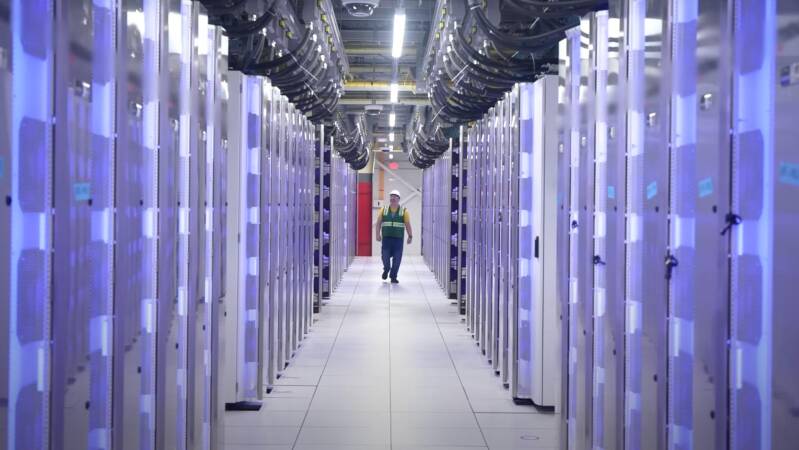
All of this is a reminder that the future digital economy, however virtual it may appear, depends on very physical foundations. Behind every AI model are semiconductors, data centers, cooling systems, power lines, water, raw materials, and extraordinary amounts of energy. Artificial intelligence may exist as software, but the conditions that make it possible are just as material as steel, coal, and steam engines once were.
When Money Becomes Irrelevant but Ownership Matters More Than Ever
Musk believes that digital superintelligence alone could increase global economic output by perhaps 20 to 30 percent. But combined with advanced robotics and industrial operations in space, the possibilities could become radically greater. Eventually, humanity's material needs might be met with so little effort that conventional money loses much of its practical significance.
It is an idea worth examining, but not one we should accept uncritically.
Money is not simply a measure of available resources. It is also a system for organizing exchange, allocating scarce assets, and determining who has a claim to what. The ability to produce more energy does not automatically mean that everyone gets access to it. The fact that robots can construct housing does not mean housing becomes affordable or available to everyone. And the ability of AI to perform work without human involvement does not guarantee that the economic benefits will be distributed fairly.
This is where I think Musk makes a rather extraordinary intellectual leap. He describes how technology might eliminate much of our economic scarcity, but pays considerably less attention to the political and social systems that determine who benefits from that abundance.
History should make us cautious. As agricultural societies developed, control over land became a fundamental source of wealth and power. Industrialization shifted much of that power toward those who owned factories, machinery, and capital. Electrification and the oil industry created new economic power centers, while the internet eventually turned digital platforms and information flows into strategic assets. Every technological revolution increased humanity's productive capacity, but none automatically eliminated economic inequality or concentrations of power.
On the contrary, many technological revolutions initially widened the gap between those who owned the means of production and those who depended on them.
Why should artificial intelligence necessarily follow a different pattern?
This becomes particularly interesting when Musk himself explains that his enormous personal wealth consists primarily of ownership stakes in SpaceX and Tesla, and that what matters to him is retaining sufficient voting control to direct the companies' development. A contradiction emerges that is difficult to ignore. The same man who speaks about a future in which money no longer matters is working to preserve substantial personal influence over some of the most important technological infrastructure of that future.
This is not necessarily hypocrisy. His conviction may be entirely genuine. But it demonstrates that money and power are not the same thing. Even if money eventually changes its meaning, control over energy, robotics, and artificial intelligence could become more important than financial wealth itself.
We may therefore be moving toward a world in which material abundance increases while genuine individual independence declines.
The New Industrial Revolution Needs Energy – and Risks Creating a New Aristocracy
Nvidia CEO Jensen Huang adds another dimension to this development. At an event in Berlin in October, he described how a major AI data center with a capacity of one gigawatt could represent an investment of approximately $50 billion. In his economic illustration, such a facility could generate $40 billion in annual revenue, meaning that a delay of only a few months could translate into billions in lost sales. This was a hypothetical calculation, but it illustrates the enormous financial expectations driving the expansion.
The real constraint is also beginning to shift. It is no longer enough to purchase the most advanced AI processors. Companies must also be able to supply them with electricity, cool them, and construct the infrastructure needed to keep them operating. The International Energy Agency estimates that global electricity consumption by data centers could rise from approximately 485 terawatt-hours in 2025 to around 950 terawatt-hours by 2030. That would represent a near doubling in just five years.
In other words, we are not simply talking about a digital revolution. We are talking about a new wave of industrialization on an extraordinary scale.
And there is a historical parallel that is difficult to ignore. During the rise of industrial capitalism, groups of wealthy owners acquired influence over society that had previously been reserved largely for royal families and landowning aristocracies. They controlled not only factories but also significant parts of people's livelihoods, housing, and everyday lives. Labor movements, trade unions, democratic reforms, and social legislation emerged partly as counterweights to this concentration of economic power.
What happens if the next generation of industrial aristocrats controls not factories and railways, but the intelligence that businesses, governments, and individuals increasingly rely upon to make decisions?
That is hardly an insignificant question. If AI systems become progressively more capable, their owners could gain influence over employment, education, research, media, and public planning that extends far beyond today's digital platforms.
The discussions surrounding a possible merger between SpaceX and Tesla are therefore important in principle. The companies have confirmed that special committees are examining the possibility, although no transaction has yet been agreed upon. Such a merger could bring together enormous resources in energy technology, robotics, communications, transportation, and artificial intelligence under an even more unified ownership structure.
From an industrial perspective, that might appear entirely rational. From a democratic perspective, it ought to provoke a much broader debate.
Who should establish the boundaries for companies whose technological capabilities in certain fields are beginning to approach those of entire nations? And what happens to democratic accountability when essential infrastructure develops faster than legislation can adapt?
When Machines Take Over, Humans May Finally Be Free to Create Again
But I do not want to get trapped in yet another dystopian vision of the future. Doing so would mean overlooking one of the most interesting possibilities emerging from this entire transformation.
While Musk and Huang discuss data centers costing tens of billions of dollars, something remarkable is happening at a completely different level. The technology that requires enormous investments to develop is becoming increasingly accessible to people with very limited financial resources of their own. An independent creator can already use AI to develop software, analyze information, produce visual concepts, build digital services, and test ideas that previously required substantial organizations.
This does not mean expertise has become irrelevant. Rather, it changes which forms of expertise are valuable. The ability to understand a problem, recognize connections, question established solutions, and imagine something that does not yet exist may become increasingly important. Technology can take over more of the execution, allowing human beings to concentrate on ideas, context, and genuine needs.
This also opens an intriguing possibility for people whom the traditional labor market no longer considers particularly attractive. Someone over 60, someone who has lost a job, or someone who simply does not want to become part of yet another large organization can suddenly gain access to tools that were previously reserved for specialized professionals.
I can see this myself through my work with PROTO and the development of digital concepts such as SOFIA BELOW, TRUSTCHECK, and FRISTEG. None of these ideas needs to become a billion-dollar company to be meaningful. What matters is the opportunity to transform experience, curiosity, and a concrete idea into something that actually works. Technology is reducing the distance between thought and action.
Perhaps this offers a more human definition of the coming AI revolution than the astronomical revenue forecasts.
But we should not romanticize this new freedom either. Anyone building a business using external AI platforms depends on their prices, technical limitations, and terms of service. A technology that makes creation more democratic can simultaneously create new dependencies on a small number of providers. It is entirely possible for many more people to gain the ability to create digital products without gaining any greater influence over the economy in which those products operate.
The labor market will also change in ways that remain difficult to predict. The International Monetary Fund has estimated that around 40 percent of global employment is exposed to AI, with significantly higher proportions in advanced economies. At the same time, the International Labour Organization emphasizes that many jobs are likely to be transformed rather than disappear entirely. That is an important distinction, but hardly a guarantee that the transition will be painless.
The decisive question is not simply how many jobs technology creates or destroys. It concerns which people are given the opportunity to adapt, who receives the benefits of increased productivity, and whether society can learn to distinguish human worth from economic productivity.
Because if artificial intelligence really can free us from much of the work currently required to support ourselves, perhaps we should finally begin discussing what that freedom is actually for.
Protopia – A Future Worth Living In
Toward the end of his conversation with Walter Isaacson, Musk introduces the concept of Protopia. It is an idea developed, among others, by author and futurist Kevin Kelly, who coined the term in 2011. Unlike utopia, where everything is perfect, or dystopia, where development has gone terribly wrong, Protopia describes a world that gradually improves. Not a world without problems, not a world without conflict, but one that is better than it was before.
That is actually the part of Musk's argument I find most appealing.
I do not need a future in which humanity produces a million times more than it does today. Nor do I need to imagine a society where everything has been automated and human beings have been reduced to passive consumers of abundance produced by machines. What I can imagine, however, is a future where more people have the opportunity to spend their time doing something they genuinely want to do. A future where experience is not considered obsolete simply because someone has reached a certain age. Where technology helps us solve real problems, and where people no longer need to devote most of their lives to tasks that machines can perform better.
That future feels both more realistic and more desirable than the grand utopian visions the technology industry so readily presents.
Musk may well be right that energy production and artificial intelligence will become two of the most decisive economic resources of the future. He may also be right that robotics will radically transform the conditions of production. But the question of who controls those resources remains unresolved, and it will not be solved by technology itself.
It must be solved by human beings.
Perhaps that is why I believe the discussion about the future needs to move away from billionaires' visionary presentations and into our own lives. We do not first have to decide whether Musk will achieve a trillion dollars in annual revenue or whether humanity will one day colonize Mars. We can begin by asking how technology might give more people greater independence, more meaningful time, and genuine opportunities to influence the direction of their lives.
Because there is a difference between a society in which everything can be produced and a society in which people are actually free.
And it would be a rather tragic irony if we succeeded in creating artificial superintelligence, automating almost the entire economy, and conquering the resources of space, only to discover that we had simultaneously built a system in which even fewer people make decisions affecting everyone else.
Perhaps the true wealth of the future will not be measured in money, energy, or computing power. Perhaps it will be measured by how much freedom technology actually gives to the individual.
And that is still a future we humans must choose to build.

By Chris...
Sources and Further Reading
Elon Musk Just Made the Call of a LIFETIME – YouTube
SpaceX – Quarterly Report Q3 2026, SEC
SpaceX – Earnings Call Transcript, October 20, 2026
Nvidia GTC Berlin – Jensen Huang on AI Data Centers
International Energy Agency – Key Questions on Energy and AI
International Labour Organization – Generative AI and Jobs, 2025