

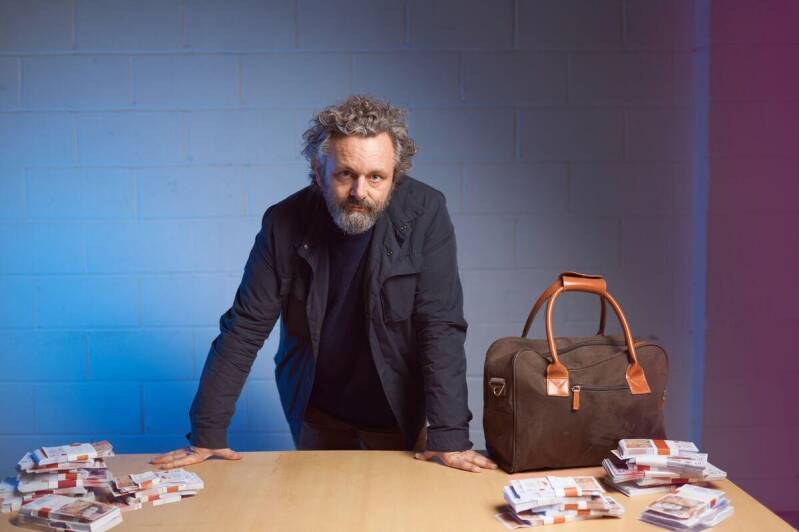
Some stories of generosity make us smile for a moment. Others make us question how our entire society works. Welsh actor Michael Sheen’s decision to spend £100,000 of his own money buying and cancelling debts worth approximately £1 million, owed by around 900 people, belongs firmly in the second category. What fascinates me most is not that a successful actor decided to help people he had never met. It is that he could buy their debts for one-tenth of what they actually owed. That is where a much bigger story begins, one about money, human dignity, and an economic system in which a person's debt can be worth ten times more to the person carrying it than to the company that owns the claim.
The story was documented in Channel 4’s Michael Sheen’s Secret Million Pound Giveaway, broadcast in March 2025. The project had been underway for nearly two years and was carried out without Sheen knowing the identities of the people whose debts he purchased. He knew where they lived and what types of debts were involved, but not who they were. There were no individual obligations attached, no demands for gratitude, and no expectation that the recipients would become ambassadors for a charitable campaign. The debts were purchased and written off. In simple terms, people who had outstanding financial claims against them suddenly found that those particular debts no longer existed.
But behind this apparently straightforward act lies a financial mechanism that deserves considerably more attention than the celebrity story itself.
When Your Debt Is Worth One-Tenth of Its Face Value – but You Still Owe the Full Amount
Let us start with the mathematics. Michael Sheen spent approximately £100,000 buying claims with a nominal value of £1 million. That means the debts were sold, on average, for around ten percent of their face value. A debt of £10,000 could therefore, in simplified terms, represent a market value of just £1,000 to the institution selling it.
This is where I think we should start asking questions.
If a creditor is willing to sell a £10,000 debt for £1,000, why is the person who owes the money still expected to repay the full amount? Why can the financial reality look so different depending on which side of the debt you happen to occupy?
There are, of course, explanations. Banks and other lenders routinely sell old, uncertain, or difficult-to-collect debts to specialist companies. The price depends on several factors, including the likelihood of recovering the money, the age of the debts, and the costs associated with collection. A £10,000 claim is not automatically worth £10,000 to the company holding it. If the prospects of repayment are poor, accepting a much lower price may be a perfectly rational business decision.
But economic logic does not eliminate the moral question.
For the person in debt, that same obligation may remain a lifelong burden, even after the creditor has accepted that its commercial value is considerably lower. The buyer can then attempt to recover an amount far exceeding the purchase price. If successful, the difference, after expenses, becomes part of the profit.
This is a legal and established part of financial markets, subject to the applicable regulations. That does not mean we must automatically regard all its consequences as reasonable or desirable.
Michael Sheen did something rather extraordinary with this mechanism. He used it exactly as a professional debt purchaser might, but reversed the business model. Instead of buying debts to make money through collection, he bought them to bring collection to an end.
He took a financial instrument normally designed to generate returns and used it to create human relief.
That is a fairly radical idea.
The Debt Is Just a Number – the Consequences Can Consume an Entire Life
Sheen’s involvement had a particular connection to Port Talbot in South Wales, where the restructuring of the steel industry and the loss of jobs created enormous economic uncertainty. He has spoken about visiting a café where a worker described steelworkers breaking down in tears after losing their jobs. The experience reminded him that financial disasters do not always begin with irresponsible decisions. Sometimes they begin when a company closes, a workplace disappears, or a family's circumstances change overnight.
This is a dimension frequently missing from discussions about personal debt.
We like to talk about personal responsibility, financial discipline, and the importance of living within our means. All of those things matter. But financial difficulties can also arise from illness, unemployment, divorce, business failures, and circumstances beyond an individual's control.
There is also a point at which the debt itself begins creating further problems. Reminders multiply, fees and interest may continue accumulating, and someone who already has no money is expected to find money that simply does not exist. Letters remain unopened. Telephone calls become frightening. Shame grows. Eventually, the issue is no longer just the original debt but a person gradually losing control of their entire life.
It is easy to tell people to take responsibility for their finances. It is considerably harder to explain how they are supposed to do so when their finances have already collapsed.
The psychological dimension is at least as important as the financial one. Debt can make people passive, not because they lack the will to change their circumstances, but because the problems have become so overwhelming that they no longer know where to begin.
That is why I believe it is important not to reduce Michael Sheen's actions to a story about a wealthy man paying poor people's bills. He did something more concrete. He removed financial claims that might otherwise have followed people for years.
That does not mean all 900 individuals suddenly became completely debt-free. We do not know what their other financial circumstances looked like. But a cancelled debt is still a debt that no longer needs to be repaid. For someone living on extremely narrow margins, that can mean the difference between continuing to sink and finally having an opportunity to climb back up.
Why Does It Take an Actor to Do Something Society Should Be Better At?
This is where the story becomes particularly interesting from a wider social perspective. If a private individual can organise the purchase and cancellation of debts at a fraction of their face value, why are we not better at creating systems that help people before their financial problems become almost impossible to manage?
I am not suggesting that banks and lenders should simply forgive 90 percent of every loan. That would be an oversimplification, ignoring the enormous differences between various types of debts, their risks, and their values. A functioning credit system also depends on agreements generally being honoured.
But surely there should be more room for common sense.
If an old debt is already considered so uncertain that it can be sold for ten percent of its nominal value, should there not be greater opportunities to offer the debtor a realistic settlement before that claim is sold to someone else? Could more people be given a second chance if some of the resources currently devoted to debt collection were instead invested in early financial guidance, renegotiation, and sustainable repayment arrangements?
Debt relief procedures, debt restructuring, and various forms of financial counselling already exist in many countries. Sweden, for example, has a formal debt restructuring process administered by the Swedish Enforcement Authority, alongside municipal budget and debt counselling services. The problem is therefore not that all the necessary tools are missing. It is that people do not always find them in time, understand how they work, or have the emotional strength to take the first steps.
Michael Sheen himself has made it clear that his initiative does not solve the larger problem. He has been involved in campaigns for fairer financial services and has supported British initiatives seeking to improve access to affordable credit. That distinction matters. Charity can transform individual lives, but genuine social change also requires us to examine why the need for charity arises in the first place.
And perhaps even more importantly, why certain financial problems are allowed to grow until they become business opportunities for someone else.
There is nothing automatically immoral about buying an uncertain debt at a discount. A functioning secondary market for debt can even have economic benefits. But we must distinguish between a transaction being economically rational and its consequences being socially reasonable.
Those are not necessarily the same thing.
From Michael Sheen to FRISTEG – When Technology Serves a Human Purpose
Over the past few months, I have been working on a digital project called FRISTEG, developed within my independent creative workshop, Made by PROTO. It is a free digital tool designed to help people facing debt problems understand their finances, organise information about what they owe, and prepare themselves for the next step towards a more manageable situation.
I also have personal experience of going through debt restructuring. That makes this subject considerably more than an interesting economic debate for me.
FRISTEG does not buy debts or pay people's bills. It cannot solve every problem. But the philosophy behind the project has a clear connection to Michael Sheen's actions: people should not have to become business opportunities simply to receive help.
Nobody should have to pay for the courage to take the first step towards understanding their financial situation.
When I began developing FRISTEG, I spent a great deal of time thinking about how strange it really is that people already experiencing financial hardship sometimes encounter additional costs, complicated services, and solutions that assume they possess both money and expertise. Meanwhile, the technology available today makes it substantially easier and cheaper to build practical digital tools.
With artificial intelligence and modern development platforms, an independent creator can build working prototypes that, only a few years ago, would have required considerable resources and an entire development team.
That does not mean AI automatically produces good social solutions. Technology can be used to exploit people's problems just as easily as it can be used to help them. The difference lies in the objectives we choose and the business models we create.
That is precisely why Michael Sheen's initiative interests me.
He did not use the debt-purchasing system to establish his own collection business. He used it to do something that does not normally belong within the system's commercial logic. He chose not to make money from the people whose debts he had acquired.
Similarly, not every digital service needs to be developed with the objective of charging users a monthly subscription, collecting their personal information, or turning them into part of someone else's future revenue stream.
It is possible to build tools where the primary outcome is the benefit delivered to the individual.
That does not mean developers must work for free indefinitely or that a project cannot generate income. Other models exist, including organisational funding, licensing, donations, and partnerships. But the person already experiencing financial hardship does not necessarily need to be the one paying.
For me, this is one of the most interesting possibilities offered by today's technology. We can begin shifting our attention away from how much money an app might generate and towards how much genuine value it can create.
Perhaps the Most Important Deal Is the One You Choose Not to Make
There is one detail in Michael Sheen's story that I believe deserves particular attention. He did not know who the 900 people were. He could not select the most sympathetic stories, the most grateful recipients, or the individuals likely to generate the best publicity.
The debt project eventually became a widely discussed television documentary, and the story spread internationally. But the cancellation of the debts themselves did not depend on people publicly sharing their personal financial failures.
That is an important distinction in an age when even charity is increasingly packaged as content.
We have become accustomed to a digital economy in which almost everything is expected to be measured, sold, subscribed to, and converted into data. Our interests have become commodities, our attention a resource, and our personal information part of somebody else's business model. It is therefore hardly surprising that people's financial difficulties can also become products traded in a marketplace.
But Michael Sheen demonstrates that the very same economic mechanisms can be used for entirely different purposes.
The most radical aspect of his project is not really the £100,000 he spent. It is that he used the money to create value for other people without attempting to capture that value for himself.
That idea deserves a much greater place in our discussions about entrepreneurship, innovation, and artificial intelligence.
I have spent most of my professional life working with projects and ideas, and today I see opportunities to create things that would previously have been practically or financially impossible for an individual. But technological possibilities also bring a responsibility to consider what we actually want to achieve.
Must every problem become a new market? Must every human need result in another subscription? Must every innovation be justified through projected revenue before we even discuss its value to society?
I do not believe so.
Of course, people and businesses need to earn money. That applies equally to those developing socially valuable digital tools. But it should be possible to create economically sustainable models in which revenue does not depend on exploiting the very problems we claim to be solving.
Michael Sheen has not reformed the British debt system. His intervention will not prevent future unemployment, excessive indebtedness, or economic crises. It is also important to remember that he did not invent the concept of purchasing and cancelling debt. Similar initiatives had been undertaken before, including the Bank Job art project by Daniel Edelstyn and Hilary Powell.
But his actions have helped expose a financial mechanism that most people probably never give much thought to.
They demonstrate that a debt with a face value of £1 million does not necessarily have a market value of £1 million. They show that the same financial instruments can serve completely different purposes. And above all, they demonstrate that something meaningful can sometimes be achieved simply by refusing to follow conventional commercial logic.
I believe we should carry that idea into the development of the next generation of digital services.
Not because charity should replace functioning public institutions, or because technology alone can solve poverty and excessive indebtedness. But because we need more people who can look at an established system, understand how it works, and then have the imagination to ask a different question from the one everyone expects.
Not simply how much money we can make from it.
But how many people we can actually help.
And perhaps that is precisely where the most interesting entrepreneurship of the future begins.

By Chris...
Michael Sheen: "I've written off £1 million of debt for 900 people"