

Some ideas are born from imagination. Others are born from experience.
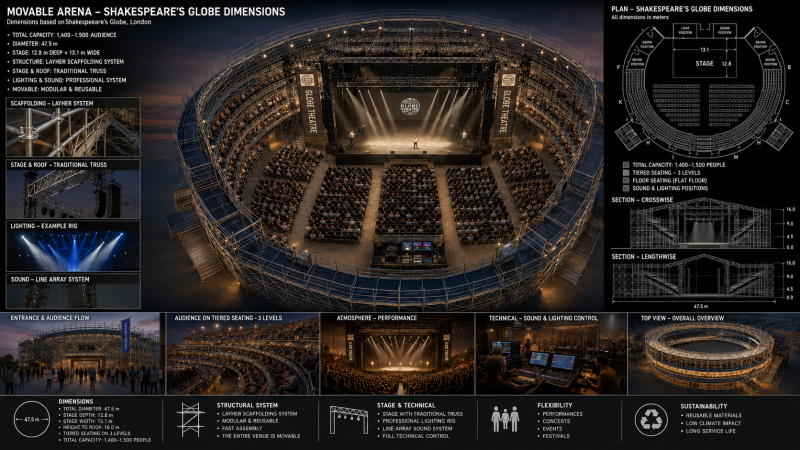
My idea for a movable arena built from Layher scaffolding, with the stage constructed from traditional entertainment truss, belongs to the second category. It is not just an image, not just a form, not just a spectacular structure inspired by the scale and audience logic of Shakespeare’s Globe in London. It is the result of years spent behind the scenes. Years of building events from the ground up. Years of seeing how productions actually work when the trucks arrive, when the ground is uneven, when time is short, when the budget is tight, and when the audience still expects magic.
It is easy to think of an arena as a building. Something fixed, expensive and permanent. Something that requires concrete, steel, permits, large investments and years of planning. But my idea begins somewhere else: what if an arena does not have to be a building? What if it can be a system?
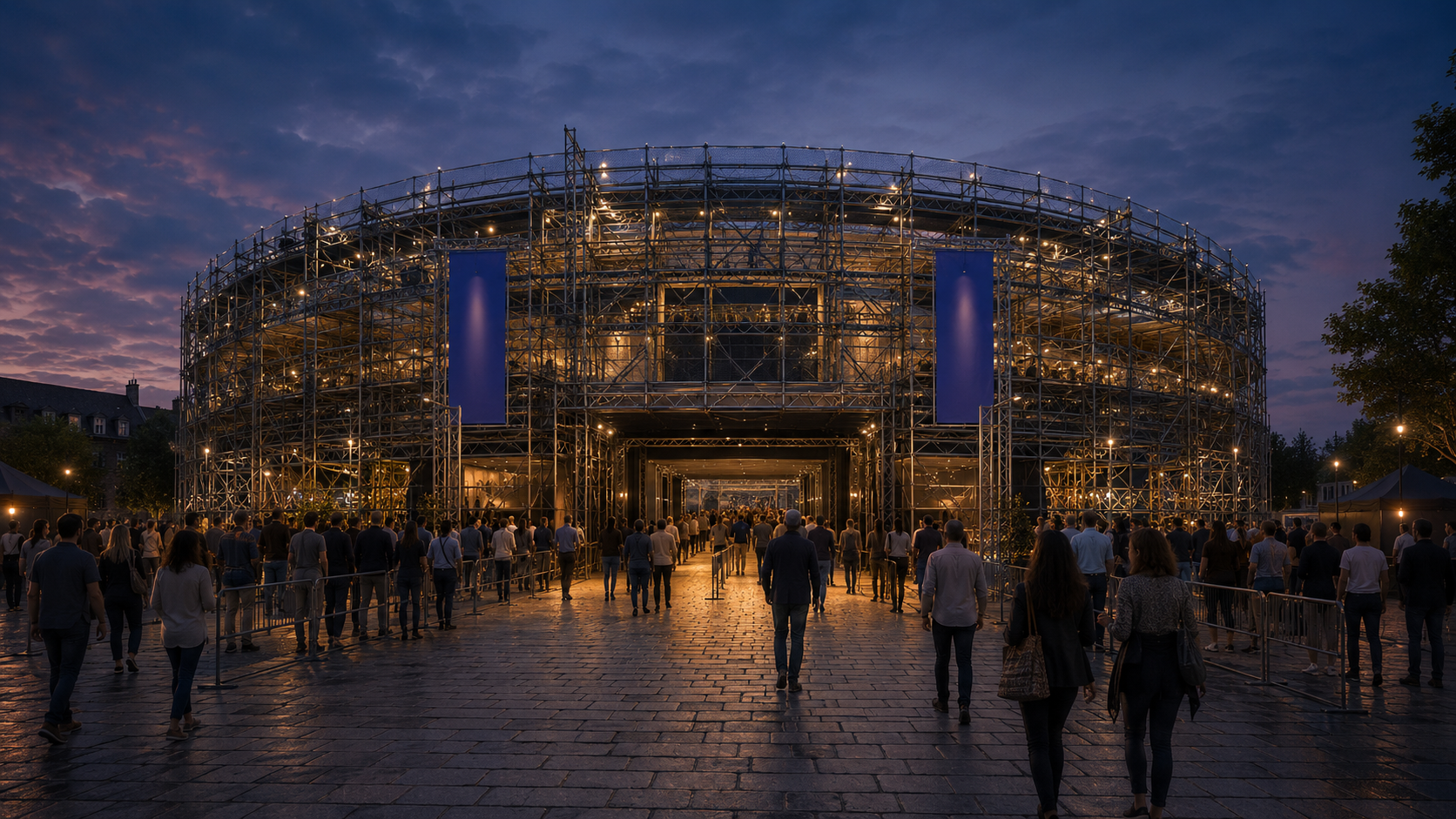
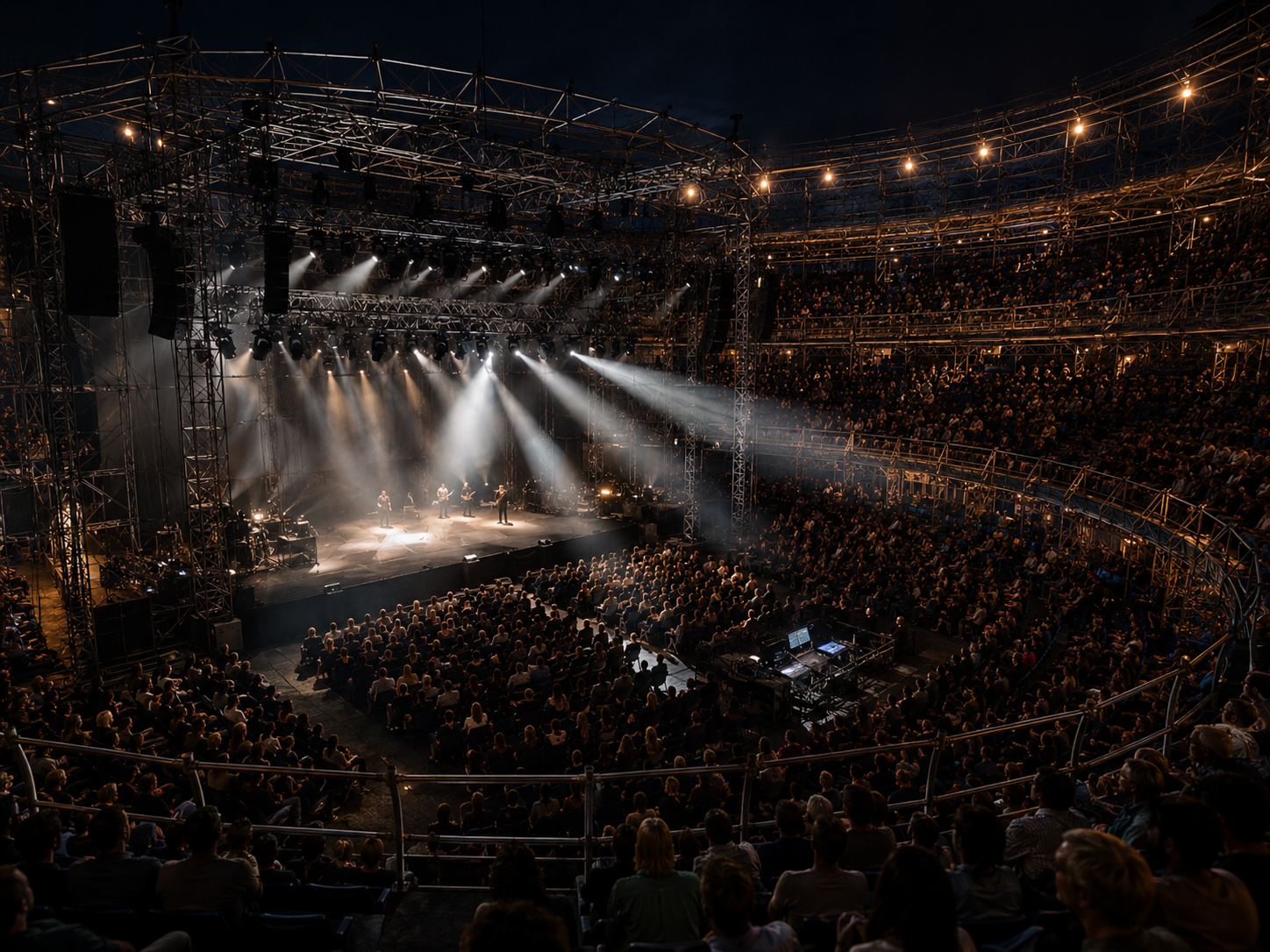
A movable arena built from scaffolding changes the entire way we think about venues. It does not become a monument. It becomes a tool. It can travel from city to city, from country to country, from festival to corporate event, from concert to theatre production, from sport to product launch. It can be created where the need exists and dismantled when the event is over. It can be adapted, scaled and developed. It can become a cultural machine that is not locked to one single location.
This is where experience becomes decisive. To even imagine using scaffolding as the foundation for an arena requires more than creativity. It requires an understanding of logistics, assembly, safety, audience flow, stage production, rigging, sound, lighting, evacuation, loading zones, depot structures, staffing and reusable systems. It requires having stood there when everything must work at the same time. When the stage must be built, when the chairs must be placed, when the technology must come in, when the audience must move safely, when backstage must function, and when the client still expects everything to look effortless.
The unique part of the idea is not only to build a round or semi-circular arena out of scaffolding. The unique part is the thought of using a company’s existing depots as the backbone of the entire system. A scaffolding company already has the material. It already has the modules. It already has people who understand the system. It already has depots in different locations. That means the whole arena does not need to be transported from one single place every time. The foundation can be built locally or regionally using existing material, while the specialist parts, stage production, truss, sound, lighting, control systems and designed scenic elements travel with the production.
This is a crucial difference.
In traditional touring production, large amounts of material are often moved over long distances. That costs money, time, manpower and environmental impact. But if the load-bearing base structure can be created through local depots, a completely different flow becomes possible. The arena is no longer one heavy organism that must be dragged across Europe. It becomes a concept, a manual, a technical recipe and a production system that can be activated in each location. A touring operating system for live events.
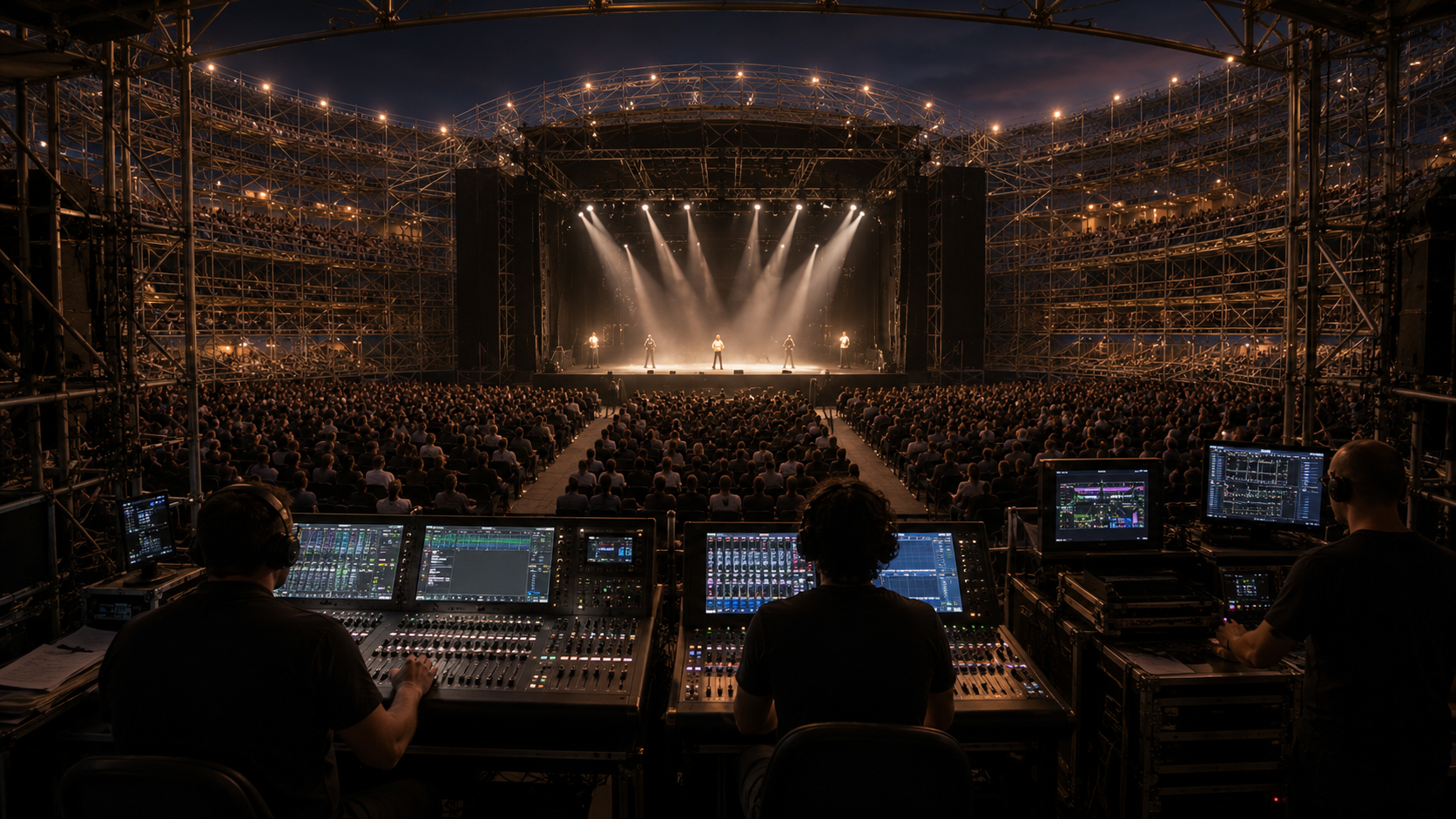
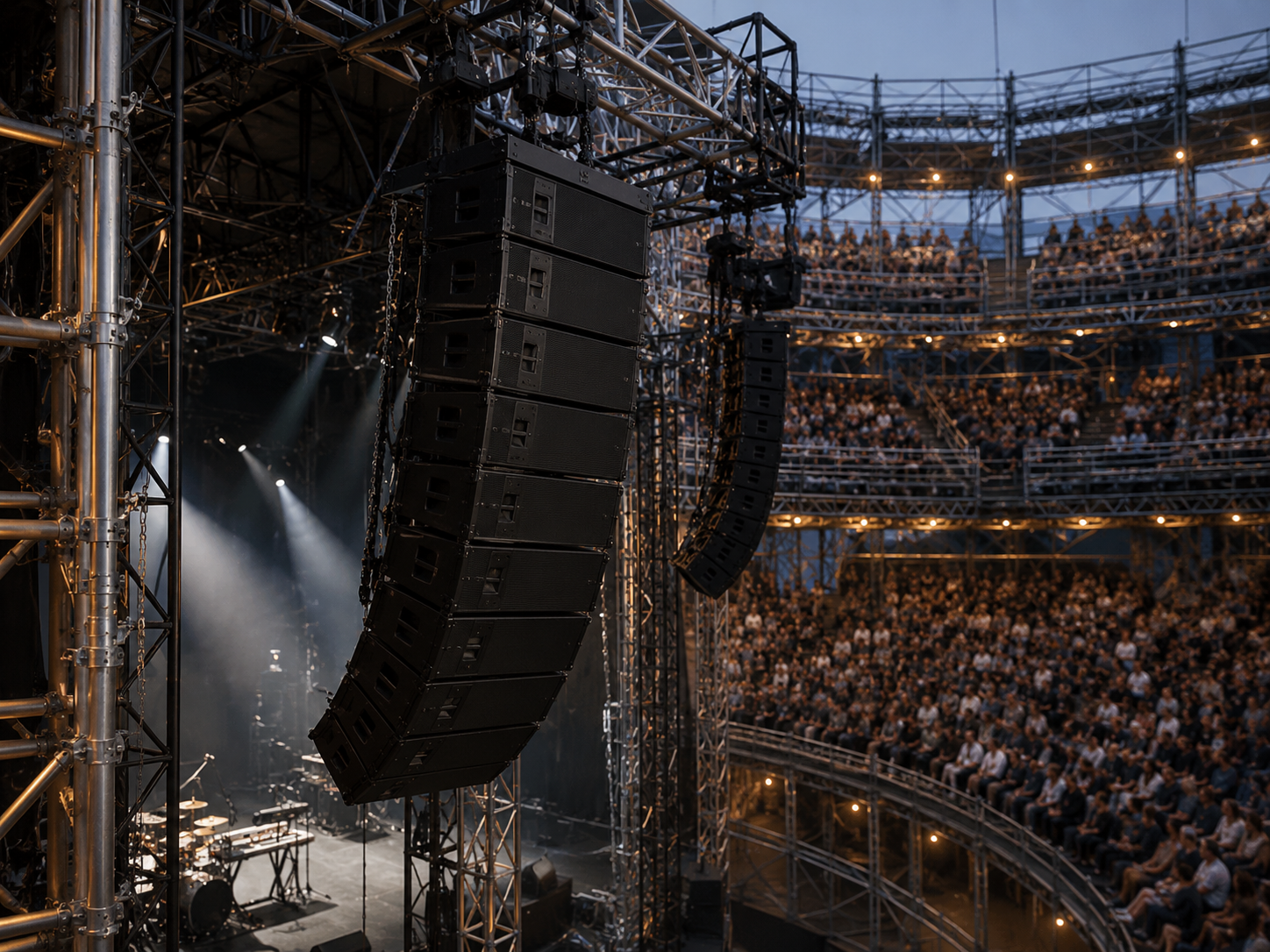
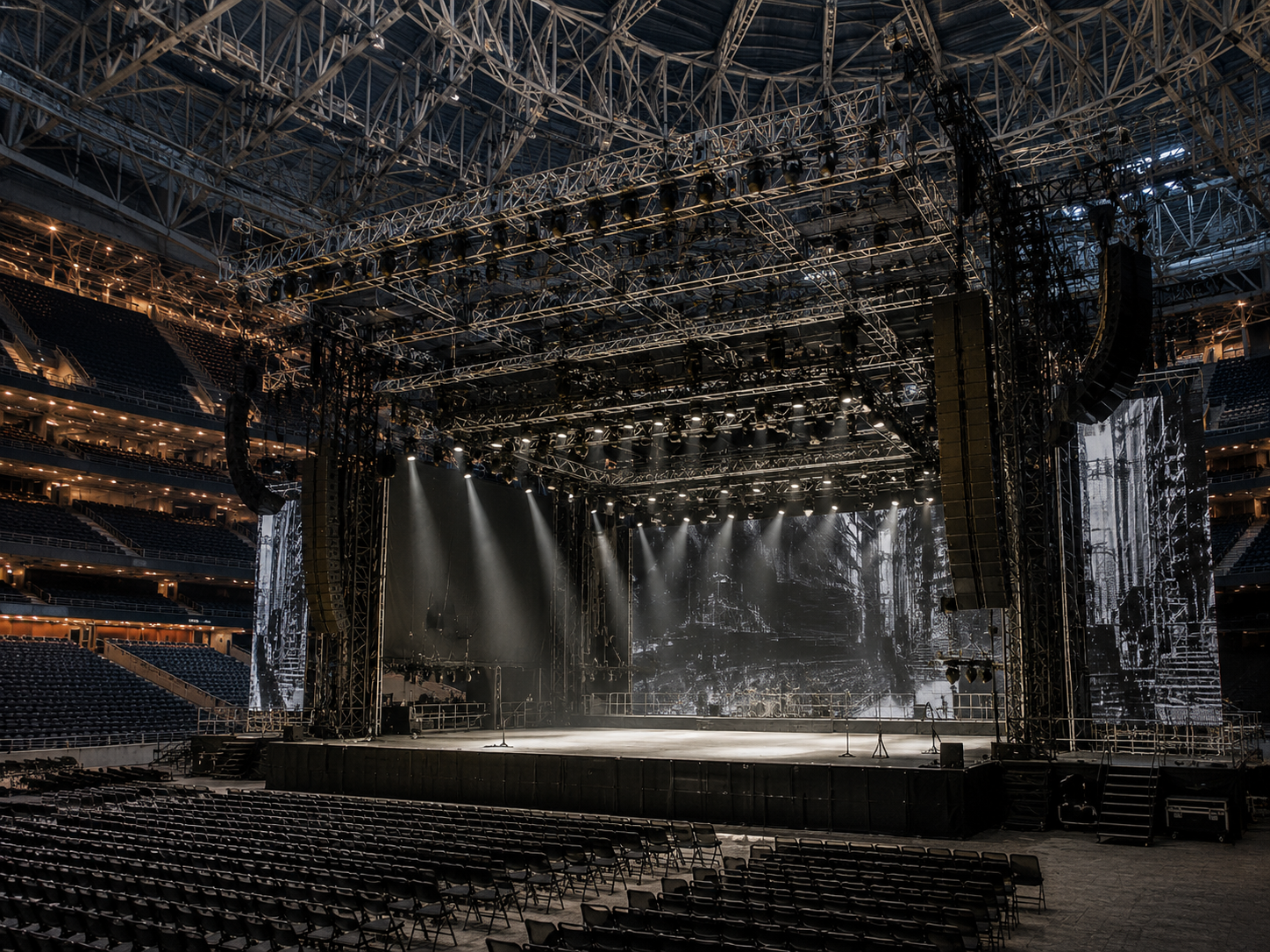
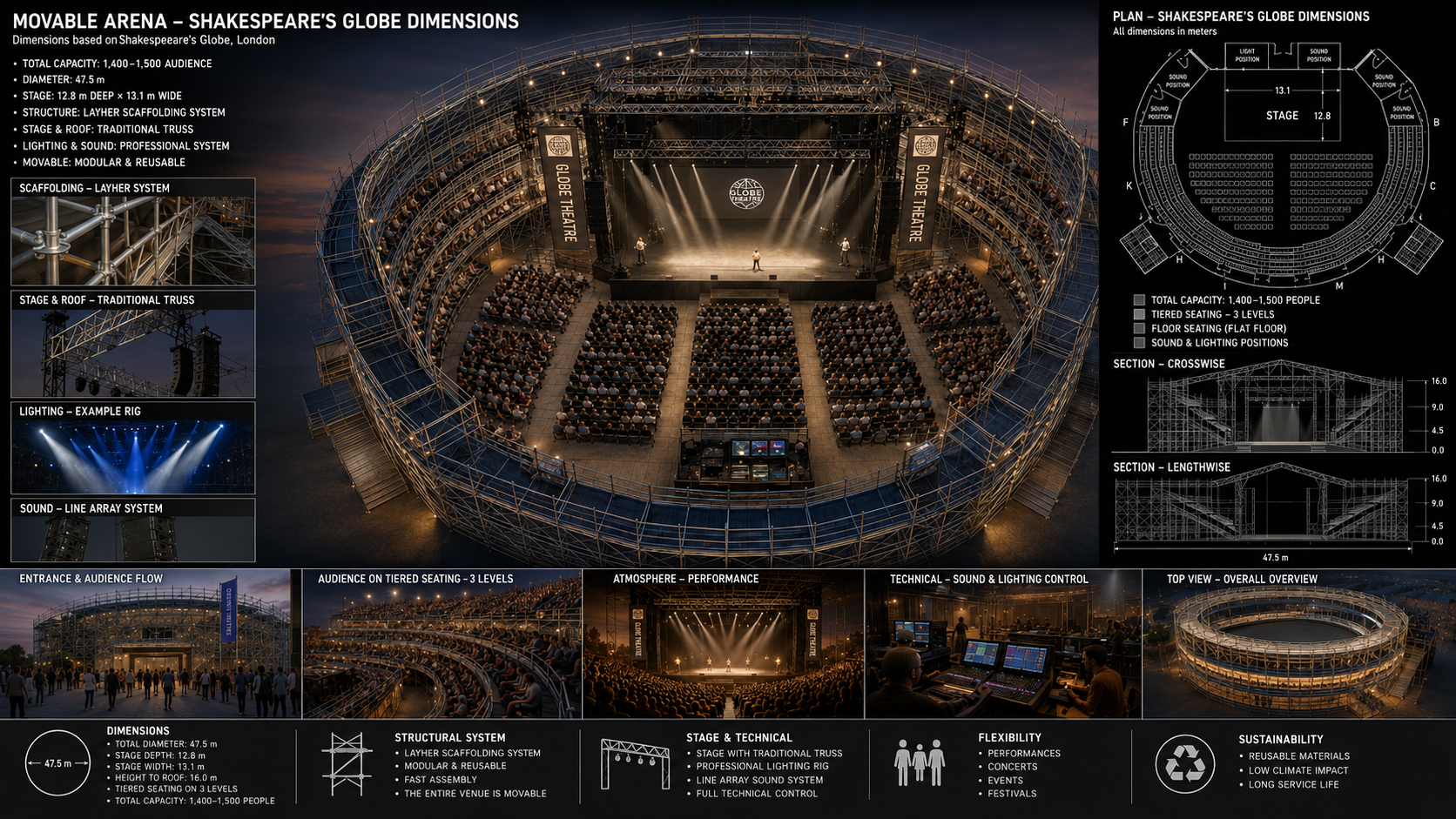
The stage is built with traditional entertainment truss because the stage has its own specific demands. That part must be approached like a production technician, not only like a builder. The truss carries lighting, sound, LED, rigging, drapes, scenic elements and technical equipment. It must follow the logic already used by the music, theatre and event industries. The scaffolding builds the body of the arena. The truss builds the heart of the stage. Together they create a hybrid between the construction industry and show production.
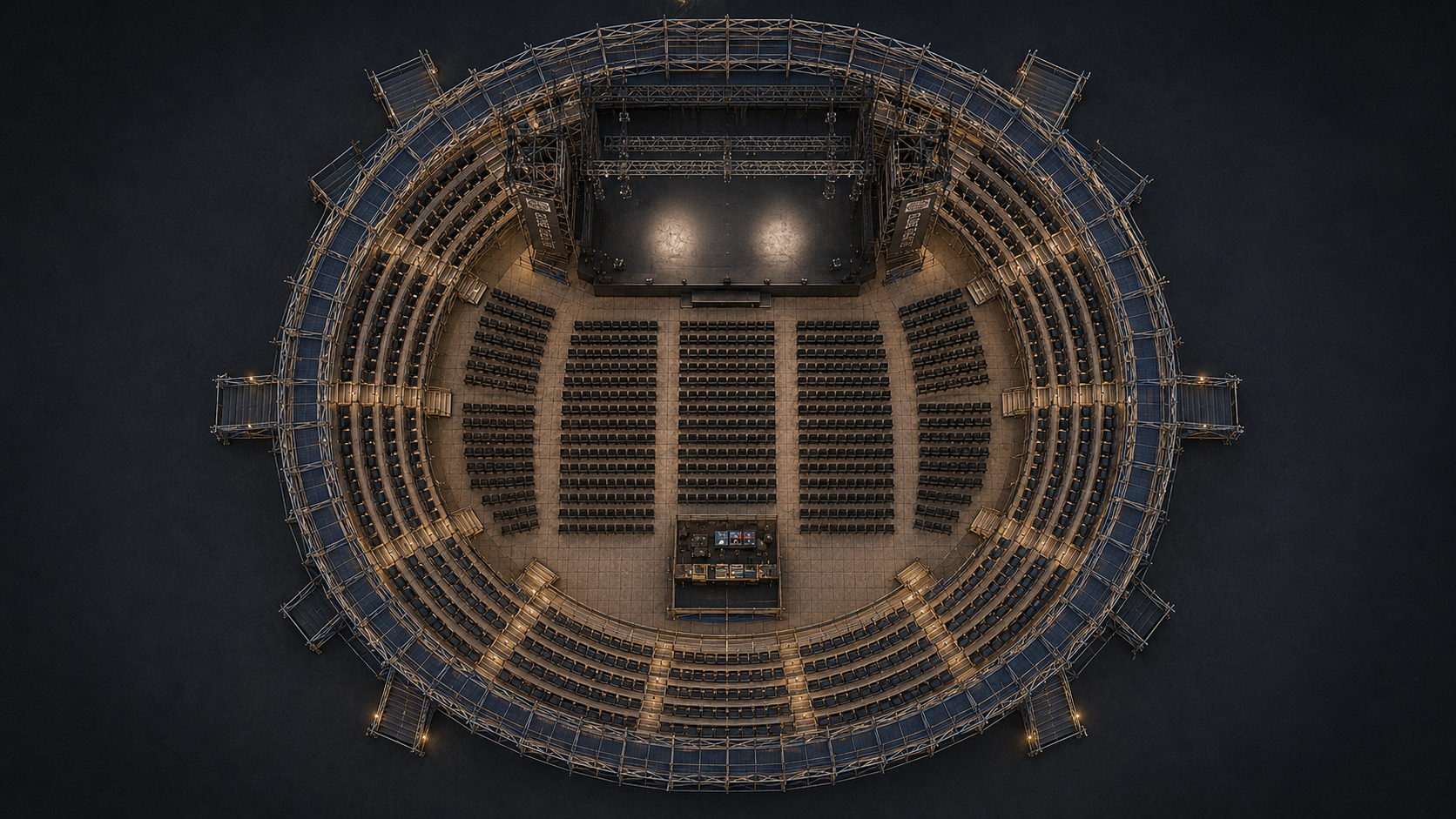
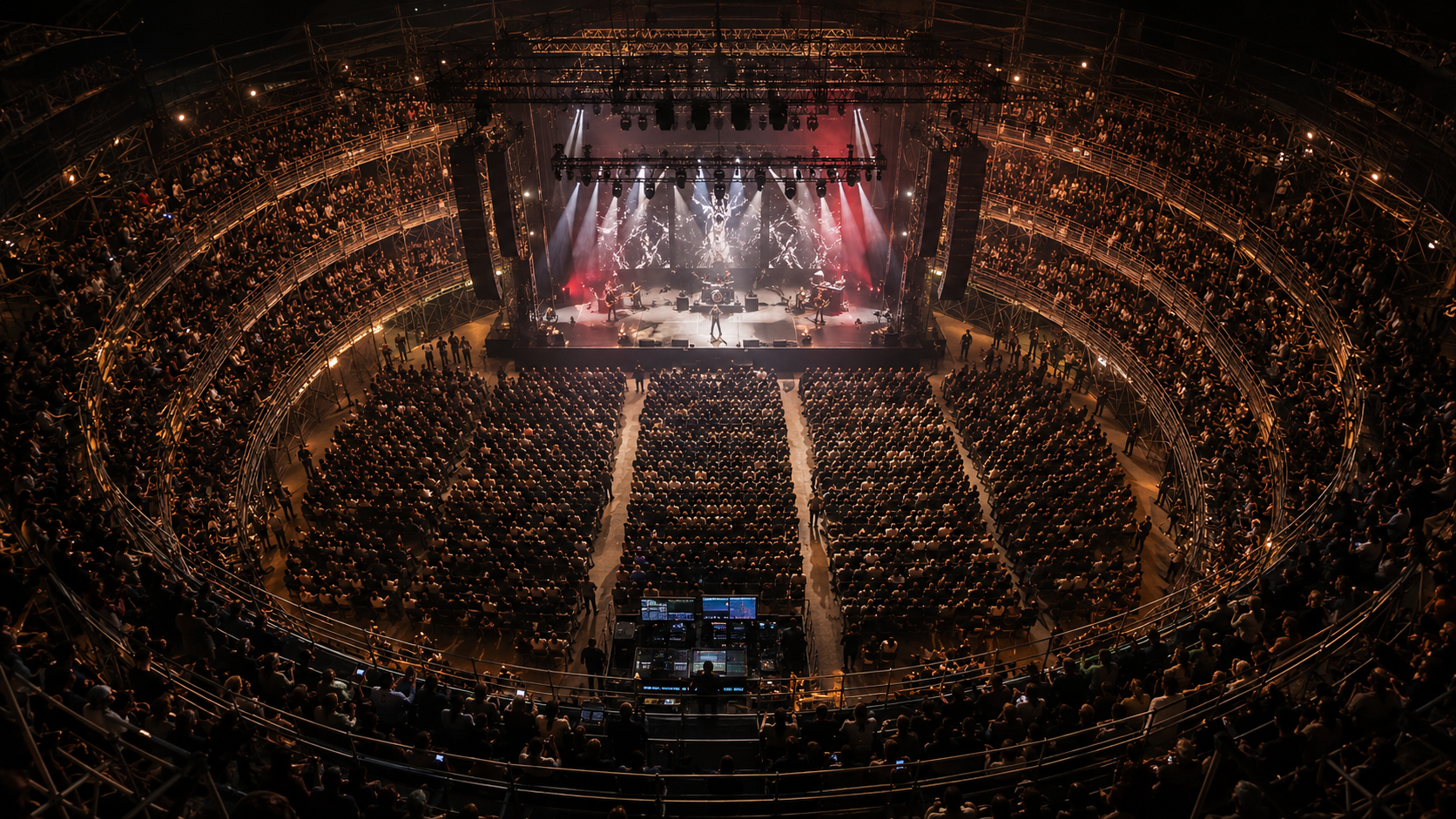
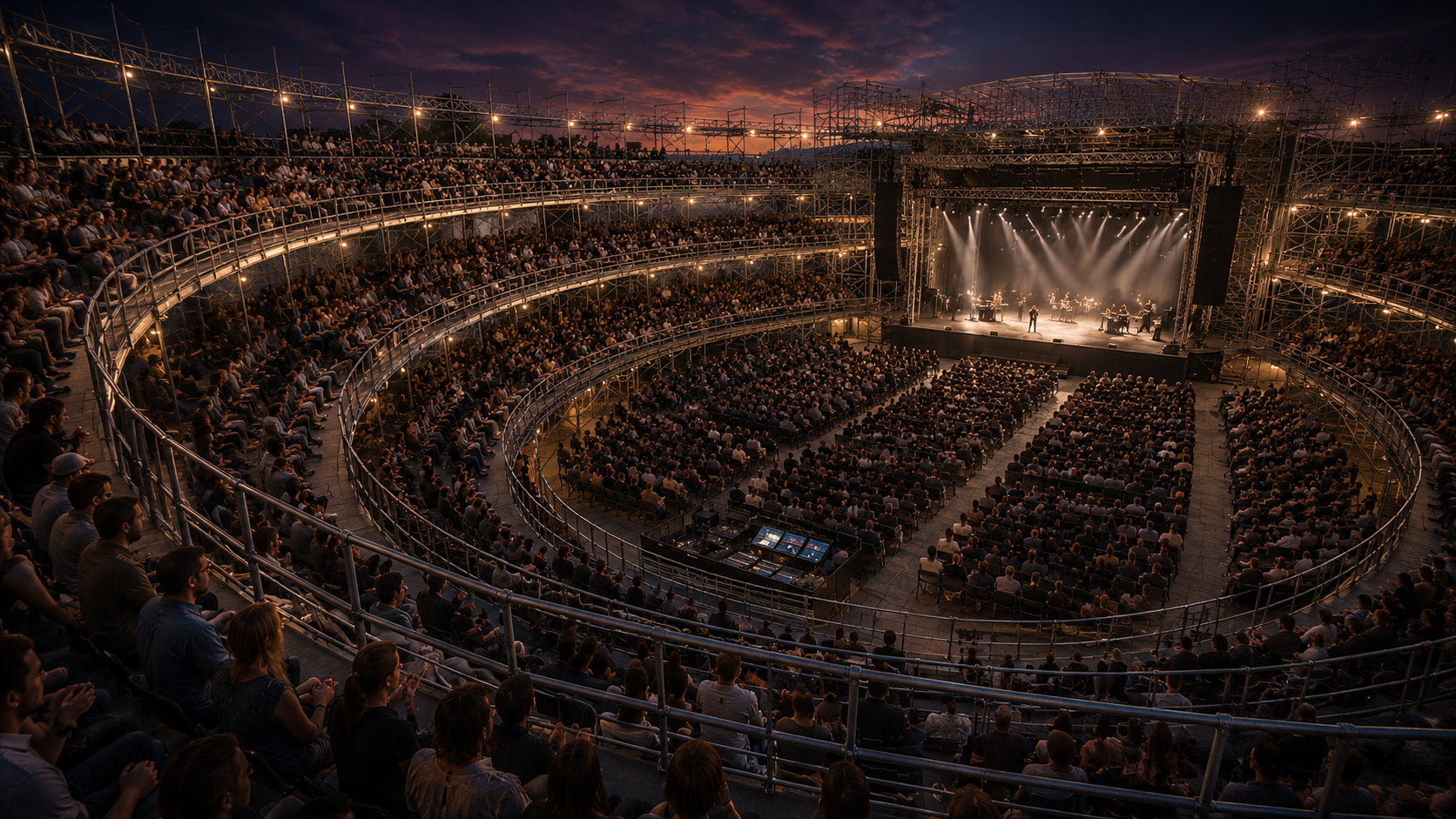
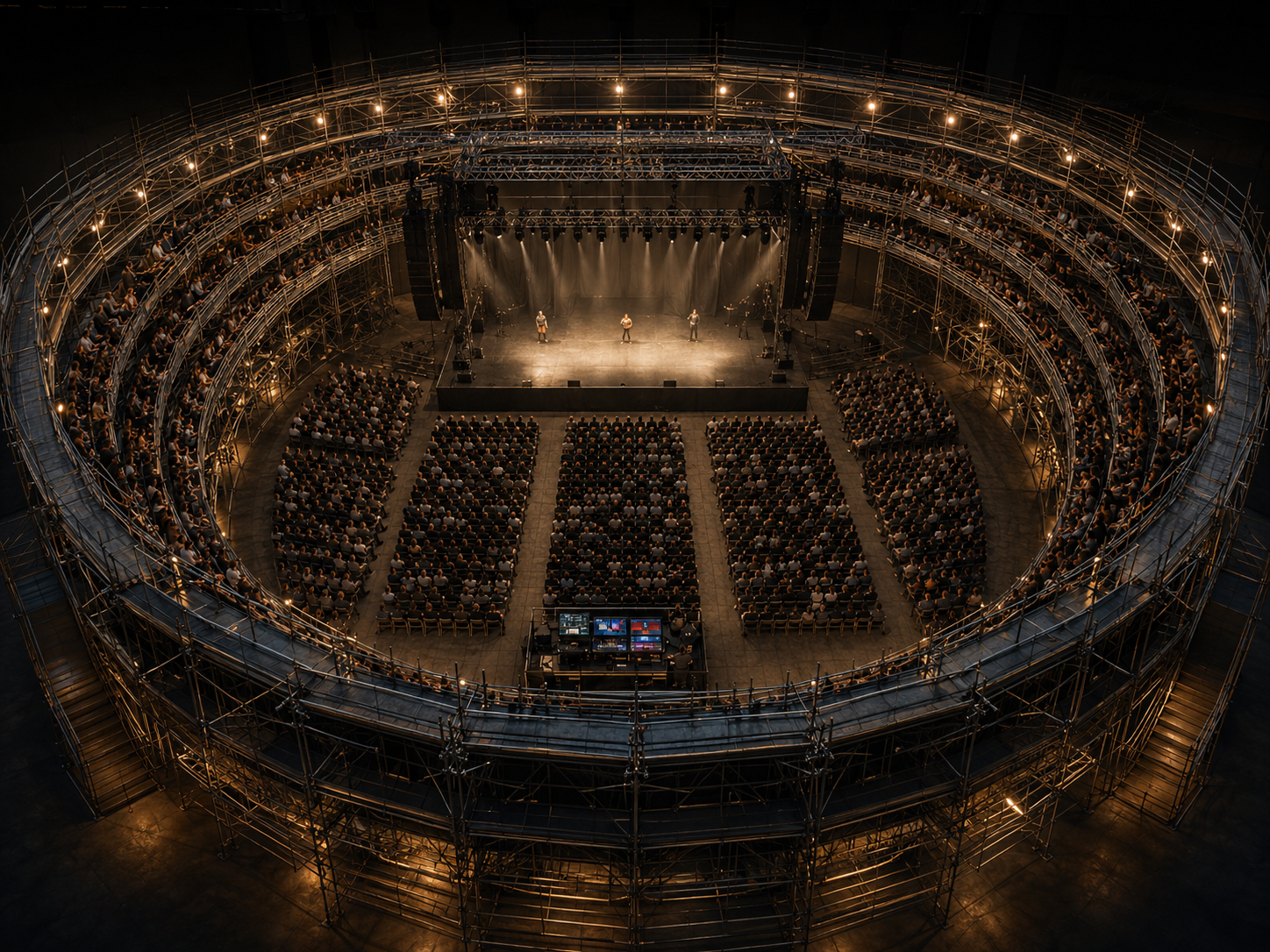
This is also why the form and scale of Shakespeare’s Globe are so interesting. The Globe is not only a theatre building. It is an audience machine. It creates intimacy despite its size. It brings the audience close to the stage. It allows people to sit on several levels around the performance and feel that they are part of the event itself. My idea takes that audience intelligence and translates it into a modern, movable, industrial arena. Not as a copy of the Globe, but as a new interpretation of its spatial logic.
The arena should hold roughly the same sense of scale: around 47 metres in diameter, with an audience capacity of approximately 1,400 to 1,500 people. That is large enough to create impact, but not so large that the experience disappears. It is an arena where everyone can still feel the stage. Where the lighting can reach the audience. Where the sound can be controlled. Where corporate events, concerts, performances and special productions can become their own world.
But this is not only a technical idea. It is also a cultural idea.
Many cities lack flexible arenas. Either they have large sports halls that feel cold and wrong for culture, or they have small venues that cannot handle larger productions. A movable arena can create a middle ground. A place that appears where it is needed. A temporary but professional meeting place. It can be a way to test markets, create festivals, activate districts, use harbour areas, transform empty land or build exclusive events without the need for permanent construction.
There is also a sustainability idea behind it. Reusable material. Modular systems. Less need for new construction. The possibility of using existing industrial infrastructure. An arena that does not require the future to be cast in concrete, but one that can adapt to reality. At a time when the event industry must think smarter, faster and more sustainably, this is not only a creative vision. It is a practical alternative.
Of course, the complexity must be respected. An arena like this must be calculated, engineered and certified. Audience load, wind load, evacuation, railings, stairs, structural capacity, rigging points, fire access, accessibility, backstage areas, power distribution, sound coverage and safety must all be handled by the right experts. This is not playing with scaffolding. It is a professional system where every part must have a function and every solution must withstand reality.
But that is exactly why the idea is strong. It brings together two worlds that already know a great deal, but rarely meet fully: the system thinking of the scaffolding industry and the scenic precision of the event industry. When these two competencies are connected, something new can emerge.
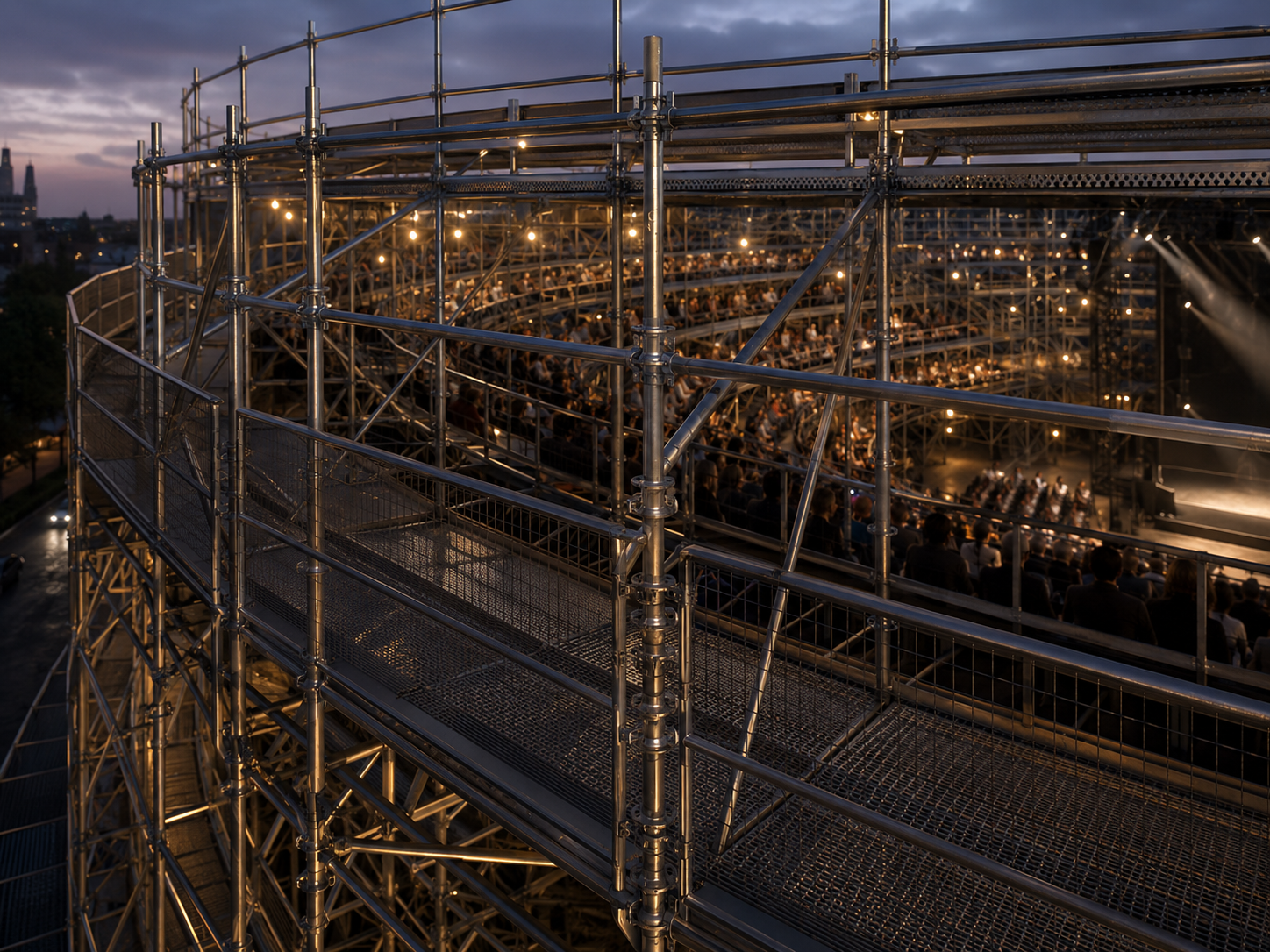
My idea is not to create just another ordinary stage. Those already exist. My idea is to create a movable arena with identity. A place that feels like its own world when you enter it. A structure where the audience can see the building, see the steel, see the construction – and where that becomes part of the experience. Not hidden. Not disguised. But honest, industrial and beautiful.
Perhaps that is where the idea truly begins: in the understanding that function can become aesthetics. That logistics can become design. That scaffolding does not only have to be something temporary on the outside of a building, but can become the building itself for an experience.
A movable arena built in this way could become a new format for the future of live events. An arena that can travel. An arena that can rise again and again. An arena that can be built from local resources while carrying an international concept. An arena that is not only about gathering an audience, but about showing how knowledge from real production environments can be transformed into innovation.
That is the core of the idea.
Not just a round stage.
Not just scaffolding.
Not just truss.
But a complete system for rethinking live events, mobility, sustainability and audience experience.
It is an idea that requires you to have been there. On the ground. In the rain. Under pressure. With the drawing in one hand and reality in the other. It is an idea that comes from practical experience, not from a conference room.
And maybe that is exactly why it is worth taking further.

By Chris...
Add comment
Comments